Ces dernières années le personnel de la Collection entomologique Ouellet-Robert c’est engagé à augmenter la valeur et l’utilisation de la Collection. De nos jours, la direction des collections ainsi que les chercheurs en entomologie ont besoin de données numériques. Dans un article récemment parue, nous avons présenté trois initiatives de numérisation au sein de la Collection
En premier lieue, nous avons examiné chaque tiroir de spécimens épinglés et chaque râtelier de fioles de spécimens conservés en alcool, et nous avons quantifié la santé conservatrice de ces unités sur huit critères (par ex., la condition des spécimens, ou de leur étiquettes, ou de leur contenants). Avec ces résultats, à être utilisés à l’interne, nous sommes en mesure de bien cibler les parties de la collection avec les les besoins les plus importants.
Deuxièmement, nous avons créé une liste des espèces dans la Collection, le nombre de spécimens de ces espèces, et si oui ou non au moins un spécimen a été collecté au Québec ou en Amérique du Nord. Ces données, mises en disponibilité en ligne, sont pour les chercheurs qui veulent savoir ce qui se trouve dans la Collection pour ensuite venir nous visiter ou demander un prêt ou d’informations additionnelles. La Collection héberge 1,5 millions spécimens, dont un tiers sont épinglés, et 20 000 espèces, dont la moitié sont d’origine québécoise.
Finalement, nous avons digitalisé les données sur les étiquettes des spécimens de certains groupes aquatiques. En premier lieue, ça implique les odonates dont nous en avons des milliers de spécimens, grâce aux travaux des anciens conservateurs de la Collection, Jean-Guy Pilon, Pierre-Paul Harper, et surtout Adrien Robert. Ces données seront utiles pour, parmi d’autres, estimer la répartition géographique des odonates sur un plan historique et modéliser les effets des changements environnementaux. En fait nous avons ajouté à ce jeux de données, les données des odonates des autres collections au Québec; un article qui décrit ces données est en préparation.
L’ensemble des ces trois jeux de données numériques ne représente qu’un point de départ d’un nouvel ère pour la Collection Ouellet-Robert.
Texte et figures (sauf si indiqué) CC BY-SA 2018, par les auteures.
L’espèce Podisus placidus fut décrite pour la première fois par le libraire, géologue et entomologiste spécialiste des Hémiptères, Philip Reese Uhler (1835-1913) (Sterling etal. 1997). Ladite description parut pour la première fois dans le second volume du magazine illustré The American Entomologist and Botanisten 1870. Avec l’accord de Monsieur Uhler, les éditeurs du magazine, Charles V. Riley et George Vasey, ont publié sa description de Podisus placidus peu de temps avant que celui-ci ne la publie dans l’un de ses ouvrages.
Localisation et distribution
Ce spécimen (voir Figure 1.) a été récolté à l’aide d’un filet fauchoir le 6 septembre 2018 à la Station de Biologie des Laurentides sur le chemin du Lac Corriveau (voir Figure 2.).
Figure 1. Podisus placidus identifié le 13 septembre 2018 par Lauriane Morissette et Laurie-Anne Roy. (Photo prise par Lauriane Morissette)
Figure 2. Carte avec agrandissement de la Station de Biologie des Laurentides (SBL) et du Chemin du Lac Corriveau. L’agrandissement est de x1000. (Image prise à partir de Google Earth et de Google Camera; Google Data SIO NOAA, U.S. Navy NGA GEBCO Sandsat/Copernicus en date du 24 octobre 2018, modifiée par Laurie-Anne Roy)
Podisus placidus fait partie de la plus grande famille parmi les Pentatomoidea en Amérique du Nord et est une espèce indigène du Canada et des États-Unis (McPherson 2018) (voir Figure 3.).
Figure 3. Carte du Canada et des États-Unis avec les provinces et états où Podisus placidus a été observé. D’après Maw & al. (2000), cette espèce se retrouve de la Colombie-Britannique au Québec. Malgré le fait qu’elle ait été observée, le E.H. Strickland Entomological Museum de l’Université de l’Alberta insiste sur le fait qu’aucun spécimen n’a été récolté en Alberta. On la retrouve aussi au New Jersey (Smith 1909), en Arkansas (Tadic 1963), au Colorado (Gillette et Barker 1895), en Utah (Pack et Knowlton 1930), en Idaho (Harris et Shull 1944) et en Illinois (McPherson 1982). Sans doute elle se trouve aussi dans tous les états entre ceux-ci. (Graphisme par Laurie-Anne Roy)
L’identification du spécimen s’est faite à partir de trois clefs d’identification (VanDyk 2006; Pilon 2008; Paiero et al. 2013). Les deux premières ont permis principalement l’identification du spécimen jusqu’à la famille et la dernière, quant à-elle, a permis de l’identifier jusqu’à l’espèce.
Le spécimen en question appartient à l’ordre des Hemiptera. On compte 700 espèces d’Hemiptera au Québec. L’appartenance à cet ordre fut établie grâce à la présence d’un rostre (voir Figure 4.), c’est-à-dire, d’une pièce buccale de type piqueur-suceur, adapté au mode d’alimentation particulier des Hemiptera. Ce dernier est lui-même composé de plusieurs stylets servant à perforer et drainer le contenu d’une plante ou d’une proie, dans le cas de Podisus placidus.
Figure 4. Vue ventrale de Podisus placidus. (Photo prise par Laurie-Anne Roy, modifiée par Lauriane Morissette)
Cet insecte appartient plus précisément au sous-ordre des Heteroptera, communément appelé punaises, dont la particularité réside dans la pluralité de textures des ailes antérieures. Celles-ci sont à la fois cornées près de la base et membraneuses à l’extrémité, ce qui leur vaut le nom d’hémélytres (voir Figure 5.). Outre les ailes elles-mêmes, leur positionnement à plat sur le dos est également indicateur du sous-ordre Heteroptera. Les individus du sous-ordre Homoptera, les portent plutôt en angle, ce qui leur donne la forme d’un toit. Le point d’insertion du rostre (voir Figure 4.) varie aussi entre les sous-ordres et même à l’intérieur des sous-ordres dans le cas des Homoptera. Chez les Heteroptera comme Podisus placidus, le rostre est inséré sur le devant de la tête, comme il est possible de voir à la Figure 7. Au même titre, la présence évidente d’un scutellum (voir Figure 5.), une plaque située entre l’insertion des hémélytres, constitue une caractéristique supplémentaire menant à l’identification du sous-ordre Heteroptera, celle-ci étant absente chez les Homoptera.
Figure 5. Vue dorsale de Podisus placidus. (Photo prise par Laurie-Anne Roy, modifiée par Lauriane Morissette)
Pour établir l’appartenance du spécimen à l’une des 41 familles de punaises présentes au Québec, trois caractères clés ont été relevés. La forme triangulaire du scutellum (voir Figure 5.), l’absence d’épines apparentes sur les tibias (voir Figure 6.) et la division des tarses (voir Figure 6.) en 3 tarsomères, au lieu de deux comme chez les Acanthosomatidae (un proche parent), ont permis d’associer le spécimen à la famille des Pentatomidae.
Figure 6. Vue dorsale de l’une des pattes de Podisus placidus. (Photo prise par Laurie-Anne Roy, modifiée par Lauriane Morissette)
La famille des Pentatomidae est composée de trois sous-familles. Pour établir à quelle sous-famille le spécimen appartient, le scutellum (voir Figure 5.) de forme triangulaire a encore une fois été un caractère déterminant en permettant d’écarter la sous-famille des Podopinae. De la même façon, l’observation d’un rostre épais (voir Figure 4.), dont le premier segment (voir Figure 7.) est libre a permis d’écarter la sous-famille des Pentatominae, qui possèdent plutôt un rostre mince, dont le premier segment est incrusté en dessous de la tête. Cette dernière observation témoigne donc de l’appartenance du spécimen à la sous-famille des Asopinae.
Figure 7. Vue latérale de la tête de Podisus placidus. (Photo prise par Laurie-Anne Roy, modifiée par Lauriane Morissette)
L’appartenance du spécimen au genre Podisus a été déduite à la suite de l’observation de plusieurs caractères essentiels. Une fois de plus, la forme triangulaire du scutellum (voir Figure 5.) a été nécessaire à l’identification du genre. Cela a permis d’éliminer la dernière espèce ne possédant pas un scutellum triangulaire parmi la sous-famille des Asopinae, soit Stiretrus anchorago. Le spécimen ne présente pas de couleurs vives ni de motifs marqués. Il présente plutôt une coloration assez monochrome, dans des tons brun-orangé, ce qui a permis d’écarter le genre Perillus, dont les individus sont marqués de motifs aux couleurs contrastantes, ainsi que les espèces Rhacognathus americanus et Zicrona caerulea, qui sont respectivement brun foncé ou noir et bleue métallique. Le pronotum (voir Figure 5.) de l’espèce ne présente pas d’angle huméral ou humérus (voir Figure 5.) très pointu et noir, comme c’est le cas pour Picromerus bidens. Il a donc été possible d’écarter ce choix. Pour finir, l’observation chez cette dernière d’un tylus (voir Figure 8.) qui est de la même longueur que les jugums (voir Figure 8.) a permis son association au genre Podisus.
Figure 8. Vue dorsale de la tête de Podisus placidus. (Photo prise par Laurie-Anne Roy, modifiée par Lauriane Morissette)
L’identification du spécimen à l’espèce fut quant à elle assez simple, car parmi les 4 espèces de Podisus présentes au Québec, Podisus placidus est la seule qui ne possède pas de ligne sombre au centre de la membrane des ailes (voir Figure 5.). De plus, chez cette dernière, la marge antéro-latérale du pronotum (voir Figure 5.) est droite, ce qui constitue un second trait permettant de différencier Podisus placidus de ses confrères.
Environnement
Il s’agit d’un insecte qu’il est possible de retrouver dans plusieurs milieux, dont dans les vieux champs, les forêts de feuillus et les forêts de pruche (Evans 1983). Néanmoins, il a aussi été observé sur d’autres types d’arbres : le noisetier (Stoner 1920), le peuplier (Cranshaw 2007), le saule (McPherson 1982), le cèdre blanc (Stoner 1922 d’après McPherson 1982), le chêne (Olsen 1912), le merisier, la vigne sauvage (McPherson 1982), le pêcher (Furth 1974), l’érable negundo (Gillette et Baker 1895), le pin (Olsen 1912), l’espèce Lindera benzoin (McPherson et Mohlenbrock 1976), la verge d’or(Townsend 1981), le ceriser et le pommier (Evans 1983).
Alimentation
Il est important de noter que l’une des particularités de la Sous-famille des Asopinae, celle dont fait partie Podisus placidus, est qu’elle est composée d’espèces prédatrices (McPherson 2018). La majorité des autres espèces de Pentatomidae sont phytophages.
L’alimentation de Podisus placidus est très variée. L’espèce peut se nourrir, entre autres, d’espèces du genre Malacosoma (Evans 1983), de Hypantrie cunea ou d’Orgyia leucostigma (Kirkland 1897). Donc, cette espèce se nourrit principalement d’insectes de l’ordre des Lepidoptera lorsqu’ils sont sous la forme de larves, c’est-à-dire, de chenilles. Pouvant partager son environnement avec des espèces ayant un régime alimentaire similaire au sien (par exemple, Podisus modestus ou Podisus serieventris), ceux-ci ont développé des méthodes de dispersion différentes afin d’éviter la compétition directe pour les ressources (Evans 1983).
Cycle de vie
N.B.: Cette section a été rédigée selon les observations d’Oetting et Yonke (1971). À toutes les fois où la source n’est pas précisée, cela signifie que l’information vient de leur article Immature stages and biology of Podisus placidus and Stiretrus fimbriatus (Hemiptera: Pentatomidae).
L’ordre des Hemiptera est dit hémimétabole (Favret 2018). C’est-à-dire que les espèces de cet ordre ont un développement qui comprend trois phases principales: celle de l’oeuf, un ou plusieurs stades larvaires où la mue s’effectue ainsi que la phase adulte. Dans le cas de Podisus placidus, cette espèce a un total de cinq stades larvaires (voir Figure 9.).
Figure 9. Cycle de vie de Podisus placidus avec notes des auteures. Les détails de cette figure seront discutés dans les sections dédiées aux différents stades. (D’après Oetting et Yonke (1971) et Cranshaw (2007), graphisme par Laurie-Anne Roy)
Oeuf
Les œufs de Podisus placidus sont pondues par la femelle sur le dos d’une feuille (McPherson 2018). Faisant près d’un millimètre, ils sont d’une teinte jaunâtre et verte jusqu’au quatrième jour où ils deviennent jaunes. Puis, ceux-ci prendront des teintes rougeâtres au cinquième jour. Ils sont organisés en agglomérat (voir Figure 10.) de 15 à 55 œufs environ à l’aide d’une sécrétion collante (McPherson 2018). Une caractéristique intéressante de la famille des Pentatomididae et qu’on ne retrouve pas chez toutes les familles de cet ordre est que la femelle demeure sur place jusqu’à son décès pour offrir des soins à ses œufs (McPherson 1982; McPherson 2018).
Figure 10. Oeufs de Podisus placidus sur le dos d’une feuille de peuplier. (Photo prise par Whitney Cranshaw, 2007)
Stade larvaire 1
Grande de 1,30 à 1,62 mm, la larve a une forme ronde-ovale et sa segmentation quoi que présente est très peu défini en comparaison aux autres stades. Les antennes ont une longueur de 0,92 mm et quatre segments. Il est possible d’observer sept spiracles, sur les segments 2 à 8. Oetting et Yonke (1971) ont aussi observé que durant leur première journée, les larves se nourrissent des œufs qui ne sont pas encore éclos.
Stade larvaire 2
La taille de la larve est de 2,59 à 2,75 mm. Il est possible de voir une transition et il est plus facile d’observer la segmentation à partir de ce stade comme schématisé dans la Figure 8. Les antennes mesurent 1,42 mm.
Oetting et Yonke (1971) remarque que dès lors, les larves se nourrissent de façon variée, n’ayant aucune préférence visible quant à leur proie, mais demeurant loin des chenilles poilues.
Stade larvaire 3
La taille de la larve est de 3,46 à 4,64 mm. Les antennes mesurent 2,12 mm. Un changement dans l’angle des coxas (voir Figure 4.) fait en sorte que les pattes sont plus proches du corps.
Stade larvaire 4
La taille est de 4,97 à 6,48 mm. Les antennes mesurent 2,99 mm. Ce stade est celui où débute l’apparition des hémélytres (McPherson 2018).
Stade larvaire 5
La taille est de 8,32 à 9,23 mm. Le thorax et l’abdomen sont nettement plus allongés. Les antennes mesurent 4,32 mm. Les hémélytres se forment de plus en plus de chaque côté du scutellum (McPherson 2018). C’est le plus long des cinq stades larvaires.
Le développement dure en moyenne 27,1 jours. Après chaque mue, les larves mangent pendant deux jours de façon intensive. Elles arrêtent complètement deux jours avant l’autre mue. Ce phénomène est aussi observable chez une autre espèce du même genre. Il s’agit de Podisus maculiventris (Mukerji and LeRoux 1965).
Adulte
Atteignant jusqu’à 11 mm (McPherson 1982), c’est seulement à ce stade que les hémélytres ont pris leur pleine expansion et qu’il y a présence d’ailes. Les couleurs ternes et brunâtres de l’espèce lui permettent de mieux se camoufler dans son environnement (McPherson 2018).
Reproduction
La reproduction a lieu au printemps, après que cette espèce se soit éveillée de la phase de dormance qui a lieu durant l’hiver (McPherson 2018). Il n’est pas totalement clair à savoir si cette espèce a une hibernation qui est obligatoire ou facultative. Néanmoins, l’espèce la plus proche phylogénétiquement parlant étudiée, Podisus maculiventris, a une dormance facultative (McPherson 2018).
Il est important de noter que dans certaines régions, dû à la variation de la température et de la luminosité, cette espèce peut être multivoltine (McPherson et Mohlenbrok 1976). Ceci signifie qu’elle peut avoir plus d’une génération d’oeufs sur une période d’un an selon où elle se situe géographiquement (McPherson 2018).
La première étape de reproduction sera effectuée par le mâle qui ira frotter ses antennes à divers endroits contre la femelle pour lui démontrer son intérêt. Il finira, toutefois, par se concentrer seulement sur l’extrémité de son abdomen. Si la femelle est intéressée, elle sous-lèvera le bout de son abdomen, néanmoins, si elle ne réagit pas, le mâle saura se montrer plus insistant en reproduisant la même chose, c’est-à-dire, en frottant et la poussant non pas avec ses antennes, mais bien avec sa tête. Si les tentatives du mâle demeurent infructueuses, la femelle lui donnera quelques coups de pattes ou se désintéressera complètement et reprendra son chemin.
Cependant, si elle décide d’être réceptive et de soulever son abdomen ou de laisser le mâle le sous-lever avec sa tête, celui-ci fera un demi-tour droite, lèvera son propre abdomen et tentera d’insérer son édéage dans la femelle.
Dans le cas où le mâle gagne sa conquête, les deux peuvent rester dans cette position pendant des heures et manger entre temps (voir Figure 12.). Si la femelle n’a rien à se mettre sous le labre, elle peut décider de se déplacer pour aller à la recherche de nourriture en trimbalant le mâle (McPherson 1982; McPherson 2018).
Figure 12. Deux Podisus placidus en plein acte de reproduction. La femelle est identifiable par le fait qu’elle est plus grosse que le mâle (Evans 1983). (Photo prise par Whitney Cranshaw (2007))
Les talents de prédateur de Podisus placidus ont tenté d’être utilisés afin de faire de la lutte biologique. La lutte biologique est effectuée en introduisant une espèce prédatrice dans un nouveau milieu afin qu’elle nuise à une espèce qui est elle-même nuisible ou envahissante. Tadic en 1963 a fait une étude afin d’évaluer la possibilité d’introduire Podisus placidus sur le territoire de l’ex-Yougoslavie afin de nuire à Hypantrie cunea.
Prédateur prédaté
Ce n’est pas parce que Podisus placidus est lui-même un prédateur redoutable qu’il n’est pas aussi une proie. Effectivement, deux espèces d’araignées, Epeira strix et Phidippus multiformis, sont des prédatrices de cette espèce (Kirkland 1897).
Bibliographie
Cranshaw, W. 2007. Whitney Cranshaw’s Images. Invasive.org. Consulté le 24/10/2018.
Furth, D.G. 1974. The Stink Bugs of Ohio (Hemiptera, Pentatomidae). Bulletin of the Ohio Biological Survey, (N.S.) 5(I): I-60.
Gillette, C.P., et C.F. Baker. 1895. A Preliminary List of the Hemiptera of Colorado Clarence Preston Gillette, Charles Fuller Baker. University of Michigan. 137 pp.
Google & U.S. Navy. 2018. « Google Earth; Part of North America ». 2600 km from Earth. Part of North America.
Harris, H.M., et W.E. Shull. 1944. A preliminary list of Hemiptera of Idaho. Iowa State College Journal Science Vol. 18: pp. 199-208.
Henry, Thomas J., et Richard C. Froeschner. 1988. Catalog of the Heteroptera, or true bugs, of Canada and the continental United States. New York: Leiden ; EJ. Brill. Vol. 97, pp. 243-245.
Kirkland, A.H. 1897. Notes on the life history and habits of certain predaceous Heteroptera. 44th Annual Report of the Massachusetts State Board of Agriculture, pp. 399‑407.
Maw, H.E.L. et al. 2000. Checklist of the Hemiptera of Canada and Alaska. NRC Research Press, Ottawa, Ontario, Canada. 220 pp.
McPherson, J.E. 2018. Invasive Stink Bugs and Related Species (Pentatomoidea). 2018e éd. Boca Raton: CRC Press. pp. 840.
McPherson, J.E. 1982. The Pentatomoidea (Hemiptera) of northeastern North America with emphasis on the fauna of Illinois. Southern Illinois University Press. 240 pp.
McPherson, J.E. et R.H. Mohlenbrock. 1976. A List of the Scutelleroidea of the La Rue-Pine Hills Ecological Area with Notes on Biology. The Great Lakes Entomologist. Vol. 9, no 3.
Mukerji, M.K. et E.J. LeRoux. 1965. Laboratory rearing of a Quebec strain of the pentatomid predator, Podisus maculiventris (Say) (Hemiptera: Pentatomidae). Phytoprotection. Vol. 46, pp. 40‑60.
Smith, John B. 1890. Catalogue of Insects found in New Jersey. 1re éd. Trenton.
Sterling, K. B. et al. 1997, Bibliographical Dictionary of American and Canadian Naturalists and Environmentalists, Greenwood Press, pp.791-792.
Stoner, D. 1920 (1919). The Scutelleroidea of Iowa. University of Iowa Studies, Studies in Natural History 8(4): 1-140.
Tadic, M. 1963. Possibilities for introducing into Yugoslavia Podisus placidus Uhl., an American predator of the fall webworm. J. Sci. Agr. Res. Vol. 16, pp. 43‑52.
Townsend, C.H.T. 1891. Hemiptera Collected in Southern Michigan. Proceedings of the Entomological Society of Washington, 2: 52-56
University of Alberta E.H. Strickland Entomological Museum.Podisus placidus Species Page. Entomology Collection. Consulté le 25/10/2018.
VanDyk, J. 2003-2018. BugGuide. Iowa State University, department of entomology. Consulté le 13/09/2018.
Therion fuscipennis capturé le 7 septembre 2017 dans les Laurentides (Québec, Canada), vue de face
Classification
Classe: Insecta
Ordre: Hymenoptera
Super-famille: Ichneumonoidea
Famille: Ichneumonidae
Sous-famille: Anomaloninae
Tribu: Gravenhorstiini
Genre: Therion
Espèce: T. fuscipennis
L’identification
L’espèce Therion fuscipennis, membre de la famille des Ichneumonidae, plus grande famille de l’ordre des Hymenoptera, est reconnaissable, entre autres, grâce à ses ailes. En effet, cette espèce, en plus de présenter les crochets caractéristiques de leur ordre sur les ailes postérieures, a un complexe complet de nervures, se rendant donc de la base de l’aile jusqu’à l’extrémité de celle-ci et présentant des cellules fermées. De plus, une autre caractéristique des ailes de ce genre est l’aréole, qui est ouverte, donc qui semble ne faire qu’un avec la cellule terminale située la plus antérieurement sur l’aile.
Aile antérieure de Therion fuscipennis
Therion fuscipennis, vue de côté
Therion fuscipennis, vue de dos
De plus, conformément aux autres membres de sa famille, T. fuscipennis présente un abdomen aplati latéralement qui est caractérisé par ses terga métasomiques 2 et 3 séparés par une jonction flexible et un étranglement important et facilement observable de ceux-ci, accentuant l’effet de la taille marquée du sous-ordre des Apocrita, leur permettant de replier et tordre l’abdomen sous leur corps, ainsi que des antennes composées de plus de 16 flagellomères.
Antenne de Therion fuscipennis
T. fuscipennis est reconnaissable également grâce à la forme de son oviscapte, un organe permettant la ponte des œufs. L’oviscapte est seulement présent chez la femelle et est un petit conduit fin d’une couleur tirant sur le brun-orangé, bordé de chaque côté par un cerque brun foncé.
Oviscapte de Therion fuscipennis
Les deux premières paires de pattes sont d’un jaune tournesol, alors que la troisième paire présente une alternance de couleurs, allant du noir au jaune, en passant par un brun-orangé, s’agençant parfaitement avec le dégradé présenté sur l’abdomen. De plus, la présence abondante de poils sur le thorax aide également l’identification de T. fuscipennis.
Therion fuscipennis, vue de face
L’identification de la famille a été effectuée à l’aide d’une clé d’identification retrouvée dans l’ouvrage Borror and Delong’s Introduction to the Study of Insects (Triplehorn & Johnson, 2004). La tribu a ensuite été identifiée grâce à une clé d’identification comprise dans la publication Syllabus for Ichneumonidae (Wahl, 2000). Enfin, on a identifié l’espèce en consultant la collection entomologique Ouellet-Robert de l’Université de Montréal.
La répartition géographique des Ichneumonidae
On retrouve la famille des Ichneumonidae, laquelle compte au moins 60 000 espèces, sur tous les continents. Or, cette famille prédilectionne un climat froid et humide, plutôt qu’un climat chaud et sec. Les Ichneumonidae sont plus abondants dans l’est du palaéarctique ainsi que l’est du néarctique (Minister of Supply and Services Canada, 1993), lequel comprend les Laurentides (la région où le spécimen a été capturé). L’espèce Therion fuscipennis se disperse au Canada, aux États-Unis et au Mexique (Yu, 1997).
Le sexe chez les Ichneumonidae
Chez plusieurs espèces, le mâle, coquin, se faufile derrière la femelle, puis la tapote au moyen de ses antennes pour signaler ses intentions (c’est une technique de drague qu’on aime bien surnommer «L’Ado»). Chez d’autres, le mâle, provocateur, ne craint point d’approcher la femelle de face, tout en tentant d’attirer l’attention de ladite femelle en faisant vibrer ses ailes. Le mâle, au sein de la famille des Ichneumonidae, démontre une tendance à se positionner derrière ou par-dessus la femelle, plutôt que sur le côté lors de la copulation; souvent, le mâle caresse la femelle à l’aide de ses antennes. La copulation est brève; généralement, elle ne dure qu’entre une et dix minutes. La plupart des Ichneumonidae sont arrhénotoques: les œufs haploïdes non-fertilisés produisent des mâles, alors que les œufs diploïdes fertilisés engendrent des femelles. Certaines espèces sont thélytoques; des femelles diploïdes sont produites à partir d’œufs non-fertilisés. Les espèces dites thélytoques ne comportent point de mâle. D’autres encore sont deutérotoques; les œufs non-fertilisés de ces espèces produisent des mâles et des femelles (American Entomological Institute, 2002).
Le cycle de vie de Therion fuscipennis
Chez les Ichneumonoidea parasitoïdes, on retrouve les idiobiontes, ectoparasitoïdes ou endoparasitoïdes des nymphes, ainsi que les koïnobiontes, majoritairement endoparasitoïdes. Contrairement aux koïnobiontes, les idiobiontes usent de paralysie pour subjuguer leur hôte, inhibant alors le développement dudit hôte (Quicke, 2015, p. 89).
Therion fuscipennis est une guêpe endoparasitoïde; la femelle pond un œuf unique à l’intérieur d’un hôte. L’hôte spécifique à Therion fuscipennis est Acronicta impressa, un papillon de nuit de la famille des Noctuidae. C’est dans la nymphe du papillon de nuit, à l’abri du climat hivernal, que se développe la progéniture de la guêpe (Shaffner et Griswold, 1934, p. 147). La nymphe des papillons est nommée chrysalide. Durant ce stade de métamorphose, l’insecte est liquéfié, puis reconstitué en son stade final – en adulte (Provancher, 1877, p. 80). Or, un destin plus tragique guette la nymphe victime d’un parasitoïde; soupe de ce dernier, elle deviendra! En effet, la larve de la guêpe s’accroît à l’intérieur de la nymphe du papillon de nuit en s’alimentant de ladite nymphe jusqu’à la mort de celle-ci. De la carcasse nymphale émerge un imago hyménoptère – une guêpe adulte (Fontenelle Forest, 2008).
Le cycle de vie des insectes comporte plusieurs stades; de l’œuf, émerge la larve qui se développe jusqu’à la nymphe, de laquelle jaillit l’imago – l’adulte. Le stade de développement de l’hôte prisé varie pour chaque espèce de parasitoïde. Plus tôt le parasitoïde attaque l’hôte dans son stade de développement, plus grandes sont les probabilité pour ledit parasitoïde de rencontrer un hôte propice à la ponte des œufs; plus l’hôte progresse dans son cycle de vie, plus ledit hôte est caché, dissimulé, afin de s’abrite pour l’hiver. Or, les chances de survie de la descendance des parasitoïdes accroissent plus l’hôte a acheminé son cycle de vie avant l’attaque; ladite descendance encontre moins de stress associée à la spécification de l’hôte. En outre, un hôte plus crû, de taille plus considérable, est une source de ravitaillement plus importante. Les parasitoïdes optant pour des hôtes qui se situent à l’aube de leur cycle de vie produisent plus d’œufs, puisqu’ils trouvent avec plus d’aisance un hôte adéquat pour la ponte – ils peuvent donc parasiter plus d’individus. Ils compensent ainsi pour le plus faible taux de survie – celui-ci augmente avec l’âge de l’hôte (Price, 2003, p. 196-201).
Therion fuscipennis, vue de face
Une application des Ichneumonidae : la lutte biologique
La lutte biologique, c’est l’emploi d’organismes vivants – ou de dérivés desdits organismes – pour remédier aux espèces nuisibles (Brodeur, 2016). Certaines espèces d’Ichneumonidae sont utilisées pour contrer des Lépidoptères (papillons) phytophages nuisibles. Par exemple, Diadegma semiclausum, une guêpe parasitoïde, est un agent de lutte biologique employé pour contrôler les populations de Plutella xylostella, une espèce dont la larve (chenille) est ravageuse du chou chinois Brassica chinensis L. Lors d’une étude réalisée par Amend et Mangali (1992), D. semiclausum a été relâché de façon hebdomadaire dans des fermes dans le Nord de l’île de Luçon aux Philippines jusqu’à implantation. Une à trois semaines après avoir libéré les guêpes, les premières nymphes descendant desdites guêpes ont été détectées à l’intérieur des chenilles ravageuses des champs de chou chinois. Les guêpes se sont ensuite dispersées – les ratios d’individus parasités ont atteint entre 60% et 90%. On use des guêpes parasitoïdes en lutte biologique pour inhiber la dissémination de l’espèce nuisible en anéantissant la métamorphose des individus parasités en adultes dotés d’une capacité reproductrice.
Références
Amend, J. & Mangali, T. (1992). Field release of the parasitoid Diadegma semiclausum (Hellen) (Hymenoptera:Ichneumonidae) against Plutella xylostella (L.) (Lepidoptera:Yponomeutidae) in seed pechay in Nother Luzon [Philippines]. Food and Agriculture Organization of the United Nations. Résumé repéré à agris.fao.org/agris-search/search.do?recordID=PH9311332a
American Entomological Institute. (2002). Genera Ichneumonorum Nearcticae. Repéré à www.amentinst.org/GIN/
Brodeur, M. (2016). La lutte biologique [Diapositives PowerPoint].
Fontelle Forest. (2008). Therion sp. Repéré à www.fnanaturesearch.org/index.php?option=com_naturesearch&task=view&id=1773
Goulet, H. & Huber, J. T. (1993). Hymenoptera of the word: An identification guide to families. Ottawa, Canada: Canada Communication Group.
Griswold, C. L. & Schaffner, J. V. (1934). Macrolepidoptera and Their Parasites Reared from Field Collections in the Northeastern Part of the United States. Washington, DC, États-Unis: United States Department of Agriculture.
Price, P. W. (2003). Macroevolutionary Theory on Macroecological Patterns. Cambridge, Royaume-Uni: Cambridge University Press.
Provancher, L. (1877). Petite faune entomologique du Canada. Québec, Canada: Des presses de C. Darveau.
Quicke, D. L. J. (2015). The Braconid and Ichneumonid Parasitoid Wasps: Biology, Systematics, Evolution and Ecology. Oxford, États-Unis: Wiley Blackwell.
Triplehorn, C. A. & Johnson, N. F. (2004). Borror and Delong’s Introduction to the Study of Insects. Australie: Thomson, Brooks/Cole.
Wahl, D. (2000). Syllabus for Ichneumonidae. Maryland, États-Unis: University of Maryland.
Yu, D. S. K. (1997). Therion fuscipenne (Norton, 1863). Repéré à www.taxapad.com/local.php?taxonidLC=90181837
Tout d’abord, la présence d’haltères et d’une seule paire d’ailes indique que l’individu est un diptère. Il s’agit donc ici d’une mouche mimétique qui imite une guêpe (ou autre hyménoptère à l’abdomen strié). En regardant l’aile de plus près, on observe la présence d’une fausse nervure (appelée « spurious vein ») entre les nervures radiales et médianes, ce qui est un trait distinctif de la famille des Syrphidae, une famille de mouches mimétiques. (BugGuide.net)
Figure 1: Fausse nervure caractéristique des Syrphidae. On voit aussi les poils dans la cellule bm entourée de rouge.
Il existe, pour tous les syrphes néarctiques (c.-à-d. de l’Amérique du Nord), une clé d’identification produite par la Revue Canadienne de l’Identification des Arthropodes permettant d’identifier les genres. Pour trouver le genre de notre espèce, il faut observer des caractéristiques particulièrement précises comme l’absence de poil sur le postpronotum et l’anepisternum (voir figure 2).
Figure 2: Postpronotum et anepisternum sans poil chez Syrphus (la tête est enlevée). Il est à noter que les poils présents sur la structure adjacente donnent l’impression que l’anepisternum est poilu alors qu’il est bel et bien nu sur le spécimen
On observe aussi la présence de poils longs sur la surface dorsale du calypter inférieur. Cette caractéristique est distinctive pour le genre Syrphus auquel appartient Syrphus ribesii.
Figure 3: Longs poils sur la surface dorsale du calypter inférieur. Caractéristique chez Syrphus
D’autres caractéristiques plus simples à observer permettent d’identifier le groupe Syrphus. Notamment l’absence de bandes poilues à l’apparence de velours sur les tergites abdominaux, la face principalement jaune, la marge arrière de l’œil ronde ainsi que l’absence de poil sur l’œil, la veine R4+5 de l’aile plus droite que courbée ainsi que le scutum pigmenté de façon unie. Aussi, l’abdomen se doit d’être ovale, plutôt que mince et effilé, et il doit porter des bandes colorées relativement droites allant jusqu’à l’extrémité de l’abdomen.
Figure 4: Les bandes jaunes se rendent jusqu’à l’extrémité de l’abdomen
Comme on peut le constater à la lumière du paragraphe ci-dessus, l’identification du groupe à elle seule nécessite une connaissance étendue du vocabulaire spécifique ainsi qu’une observation minutieuse du spécimen.
Pour l’identification de l’espèce au sein du genre, la clé de Vockeroth est toute indiquée. On peut trouver l’espèce Syrphus ribesii grâce aux caractéristiques suivantes:
la cellule bm de l’aile porte des poils (voir figure 1)
l’œil ne porte presque pas ou pas de poil
les tergites sont bordées de lisérés jaunes « seulement aux extrémités des taches ou des bandes jaunes » (Vockeroth 1992, pp.368-370)
On peut aussi identifier le sexe de notre individu, toujours selon la clé de Vockeroth. En effet, le fémur postérieur des mâles doit être noir sur les trois-quarts basilaires alors que le fémur du spécimen présent est entièrement jaune. Ceci concorde aussi avec la condition selon laquelle le fémur (toujours postérieur) des femelles doit être jaune au moins dans la moitié basilaire (Vockeroth, 1992). Le spécimen est donc de sexe féminin.
Biogéographie
Le plus vieux spécimen retrouvé du genre Syrphus fut découvert aux États-Unis dans l’état du Wyoming. Il date d’entre 50.3 Ma et 46.2 Ma, lors de la période du Paléogène (The Paleobiology Database). De nos jours, l’espèce Syrphus ribesii est communément retrouvée sur la majorité des terres situées au nord du tropique du Cancer, de l’Alaska jusqu’à la côte est du continent nord-américain s’étandant, à sa limite sud, au Mexique (Vockeroth 1992). Aussi bien représentée en Europe, on peut la retrouver de la Scandinavie à la Méditerranée et de l’Irlande à la Turquie. L’étendue se poursuit en Asie, de l’Oural à la Côte Pacifique, de même qu’au Japon (Syrphidae Community Website).
Sous la forme adulte, Syrphus ribesii est retrouvée en milieux perturbés par les humains comme « […] les fermes, vergés, milieux horticoles, jardins, parcs, plantations de conifères ; ainsi que la plupart des types de forêts décidues et de conifères. » (Syrphidae Community Website).
Biologie
Syrphus ribesii possède un cycle de vie permettant 2 à 3 générations par année (E.H. Strickland Entomological Museum). Ce cycle est très simple : suite à l’éclosion de l’œuf, il y a 3 stades larvaires (Syrphidae Community Website), suivis de la formation d’une pupe d’où émergera l’adulte. Une fois adulte, 7 à 8 jours sont nécessaires à la femelle afin de pouvoir pondre ses œufs. L’accouplement se fait en plein vol et ne dure que 2 secondes (E.H. Strickland Entomological Museum).
À l’automne, lorsque le froid commence, les adultes migrent vers le sud, tandis que les larves tombent au sol et se réfugient sous la litière humide. Ces dernières sont fortement tolérantes au froid, pouvant survivre à des températures descendant jusqu’à -35°C pendant de courtes périodes (Hart et Bale, 1997). Cette caractéristique est particulièrement importante dans les régions où la migration n’est pas possible, permettant ainsi à l’espèce de survivre l’hiver. Au printemps, la température se réchauffe, ce qui permet le retour d’une partie des adultes ayant migré vers le sud. Au même moment, les larves, ayant passé l’hiver au froid, émergent de la litière en tant qu’adultes (Hart et Bale, 1997).
La larve se nourrit d’une grande variété d’espèces parmi, entre autres, les genres Aphis, Cinara, Macrosiphum et Pemphigus qui font partie du groupe des Aphidoidea, mieux connus sous le nom de pucerons (Vockeroth, 1992). Ce stade de vie est aussi très vulnérable aux prédateurs, dont certains parasitoïdes comme les familles « […] de Braconidae, de Chalcididae, de Proctotrupidae, de Encyrtidae et de Ichneumonidae » (E.H. Strickland Entomological Museum).
L’adulte mâle ne se nourrit pas et préfère voler en groupe. Toutefois, les femelles se nourrissent de nectar et de miellat (Espace pour la vie) et permettent ainsi la pollinisation d’une vaste variété de plantes, « […] incluant les composés, les ombellifères ainsi que les fleurs de plusieurs arbres et arbustes » (Syrphidae Community Website).
La ressemblance aux hyménoptères, comme les abeilles et les guêpes, distingue les individus de la famille des syrphidés des autres diptères. Cela leur permet d’échapper à certains prédateurs, comme les oiseaux. Que ce soit au niveau des couleurs, de la forme du corps ou encore du comportement, la tromperie du mimétisme batésien peut parfois être très spécifique, c’est-à-dire ressembler à une autre espèce précise de la même région comme chez Volucella bombylans, ou plus générale (Vockeroth, 1992). En ce qui a trait à Syrphus ribesii, l’alternance de jaune et de noir sur l’abdomen représente bien le patron de couleurs des hyménoptères, mais il n’est spécifique à aucune espèce.
Vockeroth J.R. (1992). The Insects and Arachnids of Canada part 18 – The Flower Flies of the Subfamily Syrphinae of Canada, Alaska, and Greenland – Diptera: Syrphidae. URL: http://publications.gc.ca/pub?id=9.811395&sl=1
Il est d’abord important de préciser que la classification des chilopodes est très peu étudiée dans le monde, et encore moins au Canada. Il en résulte une certaine confusion au niveau de la nomenclature des ordres et autres rangs inférieurs. Certains auteurs précisent dans leurs travaux la présence d’un grand nombre de synonymes parmi les espèces décrites (Kevan, 1983). L’identification du spécimen c’est effectué au mieux des connaissances actuelles, et le nom de l’espèce indiqué est celui le plus communément accepté et utilisé dans la littérature scientifique.
L’identification de ce myriapode jusqu’à la famille fut l’étape la plus facile de l’identification et, cette étape c’est essentiellement reposé sur la clef d’identification de Kevan et Scudder (1989). Les chilopodes, connus aussi sous les noms cent-pattes ou centipèdes, se distinguent des autres classes de myriapodes par la présence de crocs à venin, nommés forcipules, rattachés au premier segment du corps. Les adultes possèdent 18 segments de tronc ou plus, lesquels portent chacun une paire de pattes sauf le premier et dernier segment.
Les chilopodes sont séparés en deux sous-classes; Anamorpha et Epimorpha. Epimorpha est caractérisé par un nombre de paires de pattes d’un minimum de 21, et comprend les Scolopendrida et les Geophilida. Anamorpha est caractérisé, quant à elle, par 15 paires de pattes (les juvéniles peuvent en avoir moins) et comprend les Scutigerida et les Lithobiomorpha. Le spécimen collecté tombe dans ce dernier ordre puisque; il possède 15 paires de pattes, les tergites ne sont pas fusionnés et il ne possède pas d’œil composé (Figure 1). De plus, il n’y a qu’une seule espèce de Scutigerida au Canada, Scutigera coleoptrata (Linnaeus). (Figure 2)
Il n’y a, au Canada, qu’un seul sous-ordre et une seule super-famille de lithobiomorphe; Lithobiiea et Lithobioidea respectivement. De même, il n’y a que deux familles de lithobiomorphes au Canada, Henicopidae et Lithobiidae. Henicopidaea à soit une seule paire d’ocelles, soit aucune. Le spécimen tombe donc dans la deuxième famille avec plus de 15 ocelles de chaque côté (fig. 1) (Kevan & Scudder, 1989).
La suite de l’identification fut plus ardue, étant donné l’inexistence de clef complète allant jusqu’à l’espèce. La clef de George Harold Scott (CDC, 1966) n’indique que deux espèces de lithobiomorphes, Lithobius forticatus (Linnaeus) et Lithobius multidentatus. Ce dernier se distingue par un nombre de segments d’antenne plus petit, entre 19 et 23, ce qui correspond à notre spécimen avec ses 20 segments. Lithobius multidentatus est une ancienne combinaison de genre et d’épithet spécifique pour ce qui est aujourd’hui connu sous le nom Bothropolys multidentatus.
Cette clef n’est toute fois pas suffisante pour mettre un nom final sur notre spécimen, puisque bien trop simpliste. La clef de Gerald Summers (Summers, 1979), bien que ne prenant en compte que les espèces du nord des États-Unis, s’avère très utile, puisque la plupart des espèces retrouvées dans un état frontière avec le Canada à de bonnes chances de s’y retrouver (Kevan, 1983). Selon cette clef, les pores coxaux séparent notre spécimen de tous les autres centipèdes qui ont: 15 paires de pattes, plus de 7 segments de corps et plusieurs ocelles. En effet, les pores coxaux du genre Bothropolys sont disposés en plusieurs rangées de manière « anarchique ». Tel est le cas pour notre spécimen (fig. 3). La clef ne mentionne qu’une seule espèce de ce genre, Bothropolys multidentatus. Au Canada, le genre est représenté par 5 espèces; B. columbiensis, B. ethus, B. hoples, B. victorianus et B. multidentatus. Les quatre premières sont retrouvées principalement en Colombie-Britannique, tandis que la dernière est retrouvée en Ontario et au Nouveau-Brunswick (Kevan, 1983). Il semble donc probable que cette espèce se retrouve également au Québec.
Figure 3: Pores coxaux sur les quatre dernières paires de pattes
L’identification est aussi confirmée en utilisant une méthode qui utilise les « éperons » (spur en anglais) de la face dorsale ou ventrale des pattes anales. Selon cette méthode Bothropolys multidentatus possède; 1 éperon sur le coxa, 3 éperons sur le préfémur et un éperon sur le fémur sur la face dorsale des pattes anales, donnant la formule 1-3-1. (Summers, 1979) Notre spécimen répond à ce critère. (Fig. 4)
Un autre critère utilisé dans l’identification des lithobiomorphes est celui de la disposition des stigmates. Malheureusement, le spécimen n’était pas en assez bon état pour pouvoir considérer ce critère.
Figure 4: Éperons de la face dorsale des pattes anales de Bothropolys multidentatus.
Cycle de vie
Le mécanisme de la fécondation chez Bothropolys multidentatus n’est pas bien connu, l’accouplement n’ayant jamais été observé chez cette espèce. La principale période d’oviposition se situe entre juin et juillet (Auerbach, 1951), cependant la femelle est capable de déposer des œufs tout au long de l’année, avec un délai de plusieurs jours entre chaque œuf pondu, ce qui permet d’expliquer le fait que de jeunes B. multidentatus soient visibles tout au long de l’année (Albert, 1982). L’éclosion a lieu entre août et début septembre. Les jeunes hibernent en hiver en étant à un stade larvaire avancé (3 ou 4), puis atteignent le stade d’imago vers la fin de l’été ou le début de l’automne (Auerbach, 1951). Les adultes peuvent ensuite vivre jusqu’à 6 ans.
Bothropolys multidentatus vit exclusivement dans les forêts décidues. Comme la plupart des centipèdes, il recherche des endroits sombres et humides, mais n’a pas d’habitat privilégié. On pourra donc aussi bien le trouver sous une pierre, dans un tas de feuilles mortes ou sous l’écorce d’un arbre mort. En hiver cependant, il préfèrera se réfugier à l’intérieur d’une souche en décomposition, le cœur de celle-ci restant humide et offrant une protection contre le froid (Auerbach, 1949).
B. multidentatus est un prédateur qui attrape ses proies à l’aide de ses forcipules, comme la plupart des centipèdes. Son régime alimentaire n’est pas bien connu, cependant on suppose qu’il n’a pas un régime sélectif et qu’il se nourrit de tous les petits arthropodes qui passent à sa portée (Auerbach, 1951).
Figure 5: Tête de Bothropolys multidentatus vue d’en-dessous. Les forcipules (première paire d’appendices transformés en crocs) sont bien visibles. Photo de Steeve Michaud et Tanguy Bernard.
Répartition et importance écologique
Le genre Bothropolys est présent en Amérique du Nord dans une zone comprise approximativement entre 35°N et 50°N (Eason, 1990). Cependant, B. multidentatus n’est présent que dans la partie Nord-Est de cette zone. On le retrouve ainsi dans les forêts décidues du Canada dans les provinces du Nouveau-Brunswick, du Québec et de l’Ontario, et aux Etats-Unis d’Amérique dans les états du Maine, du New Hampshire, du Massachusetts, de New York, de la Pennsylvanie, de l’Ohio, du Michigan et du Wisconsin (Kevan, 1983). Il s’agit de l’une des espèces de Chilopoda les plus présentes dans les forêts humides de l’Est de l’Amérique du Nord (Auerbach, 1951).
Auerbach, S.I. (1951). The Centipedes of the Chicago Area with Special Reference to Their Ecology, Ecological Monographs, 21(1), 1951, pp. 97-124
Auerbach, S.I. (1949). A Preliminary Ecological Study on Certain Deciduous Forest Centipedes, The American Midland Naturalist, 42(1), 1949, pp. 220-227
Eason, E.H. (1990). On the Taxonomy and Geographical Distribution of the Lithobiomorpha, 8th International Congress of Myriapodology, Innsbruck, Austria, July 15 – 20, 1990. http://www.zobodat.at/pdf/BERI_S10_0001-0009.pdf
Kevan, D. K. McE (1983). A preliminary survey of known and potentially Canadian and Alaskan centipedes (Chilopoda). Canadian Journal of Zoology, 1983, 61(12), 2938-2955. https://doi.org/10.1139/z83-382
Kevan, D.K. McE., & Scudder, G.G.E. (1989) Illustrated keys to the families of terrestrial arthropods of Canada: 1. Myriapods (Millipedes, Centipedes, etc.). Biological survey of Canada (Terrestrial arthropods), Ottawa. p.41-55
Scott, G.H. (1966). Centipedes: Key to some important United States species. Pictorial keys to arthropods, reptiles, birds and mammals of public health significance. U.S. departement of health, education and welfare, chapitre 19, p. 23
Summers, G. (1979). An illustrated key to the Chilopods of the North-central region of the United States. Journal of the Kansas entomological society, 52(4), 1979, pp. 690-700
La similitude dans la largeur de la base et la longueur des ailes antérieures et postérieures fait d’Enallagma boreale un membre du sous-ordre Zygoptera (Resh, V.H., Cardé, R.T. (2009). Les caractéristiques principales qui définissent les Coenagrionidae sont le nombre de nervures transversales entre la base de l’aile et le nœud, dans l’espace Sc-R (moins de 5) (1), la marge occipitale dorso-postérieure de forme transverse (2), un CuA formé de deux cellules ou plus (3), l’absence de pseudostigmate (4) et l’absence de secteurs supplémentaires entre IR1 et RP2 (5); voir photos 2 et 3 (Garrison, R.W., von Ellenrieder, N., Louton, J.A. (2010)).
L’identification au genre a ensuite été possible en suivant la clé d’identification de Damselfly genera of the New World: an illustrated and annotated key to the Zygoptera (Garrison, R.W., et al (2010)) pour les femelles étant donné la présence d’un ovipositeur et d’une épine vulvaire. Parmi les caractéristiques qui ont permis de déterminer le genre (Enallagma) on retrouve: la cellule de forme quadrilatère à angle aigu (6), les bandes thoraciques parallèles au dos (7), le patron dorsal de la tête non tigré (8), l’abdomen pas majoritairement blanc (9), le segment S8 de l’abdomen possèdant une épine vulvaire (10) et l’ovipositeur ne dépassant pas le segment S10 (11); voir photos 2 à 4.
Pour identifier l’espèce (Enallagma boreale), deux ouvrages ont été utilisés soit Damselflies of the Northeast (Lam, E. (2004))et Dragonflies and Damselflies of the East (Paulson, D. (2011)) afin de comparer les différentes espèces du genre. Le choix s’est arrêté sur Enallagma boreale, car la distribution correspond mieux à la région où le spécimen a été trouvé, la taille des taches post-oculaires (12) est semblable et que l’ovipositeur est gros (11) chez le spécimen et chez l’espèce; voir figures 3 et 4.
Photo 2. Caractéristiques de l’aile permettant l’identification d’Enallagma boreale. Cliquer sur l’image pour une meilleure vue.
Photo 3. Caractéristiques de la tête et du thorax permettant l’identification d’Enallagma boreale. Cliquer sur l’image pour une meilleure vue.
Morphologie
Les adultes chez Enallagma boreale mesurent entre 28 et 36.6 mm et ont une envergure de 17 à 12 mm. Les femelles sont généralement plus grosses à cause des ovaires. L’espèce présente un dimorphisme sexuel ainsi qu’un polymorphisme chez la femelle. Le mâle étant principalement bleu et noir avec un patron de coloration se détaillant comme suit: une tête principalement bleue, un pronotum noir, un thorax bleu, des pattes bleues ou beige avec des bandes noires, un abdomen bleu avec trois bandes noires courtes et deux longues et un cerci noir. Les femelles présentent deux morphes: un semblable à celui du mâle et le second plutôt brun-roux. Le patron de marquage est semblable aux mâles mais avec un abdomen plus noir et des zones plus claires sur les trois derniers segments.3 La raison du polymorphisme n’a pas encore été découverte et l’hypothèse qui semblait la plus probable a été écartée. Celle-ci propose que les femelles bleues pourraient échapper aux mâles qui présentent un comportement agressif envers les femelles en période de reproduction. En effet, elle a été rejetée par une étude comparant le comportement du mâle envers les deux morphes de femelles qui s’est avéré être semblable peu importe leur couleur.4
Pour ce qui en est de la larve, elle présente un corps long et mince de couleur gris ou brun avec des branchies à l’extrémité postérieure de l’abdomen. Elle possède de grands yeux, un corps couvert de soie et un labium très développé permettant d’attraper ses proies.3 .
Distribution et habitat
Enallagma boreale est une espèce indigène de la zone néarctique et sa distribution s’étend d’est en ouest à travers le Canada et les États-Unis. Sa répartition nord-sud se définie au nord par la zone subarctique et au sud jusqu’à la Californie, l’Arizona et le Nouveau-Mexique 3. L’agrion boréal est l’espèce de zygoptère la plus nordique au Canada, vivant dans des températures estivales moyennes pouvant se situer aussi bas que 2-4°C. L’espèce peut se retrouver jusqu’à une altitude de 3500m (Corbet, P.S. (1999)).
La larve d’Enallagma boreale est aquatique et se retrouve dans les milieux lentiques d’eaux douces. À l’est, elle se retrouve dans les mares sans poisson, alors que dans l’ouest elle n’y est pas restreinte. Les adultes peuvent se trouver dans de multiples biomes terrestres (boisés, tourbières, marais, montagnes, etc.), mais restent à proximité des points d’eau.3 (Paulson, D. (2011)).
Reproduction et cycle de vie
Enallagma boreale est une espèce hémimétabole qui se reproduit pendant la saison estivale, particulièrement pendant les mois de juin et de juillet, mais la période de reproduction peut s’étendre de la fin du printemps jusqu’au début de l’automne dans les régions plus chaudes. Lorsque la femelle est prête, elle rejoint leur site de reproduction, en bordure des lacs ou d’étangs, où les males passent la plupart de leur temps.3 Suite à une parade nuptiale où le male exhibe ses couleurs et démontrent ses prouesses de vol, les deux individus adoptent une position d’accouplement particulière, mais caractéristique des zygoptères. Le male attrape la femelle par sa plaque mesostigmale à l’aide des appendices à l’extrémité de son abdomen. Il doit alors transférer son sperme jusqu’à ses glandes séminales, situées sous le second segment abdominal. La femelle va ensuite balancer son abdomen vers l’avant afin de rejoindre le second segment abdominal du mâle, où le transfert du sperme à lieu. La position qui en résulte, rappelant vaguement la forme d’un cœur, est appelée « roue de reproduction ». La copulation peut durer en moyenne 23 minutes.3
Par la suite, la femelle dépose ses œufs sur la végétation flottante, celle en bordure, ou même parfois directement dans l’eau. Le male aide la femelle lors du processus afin de s’assurer qu’aucun rival ne tente de féconder sa conquête. Brièvement après la ponte, le couple meurt. Les œufs peuvent éclore après seulement 11 jours à température élevée, mais peuvent prendre jusqu’à 61 jours à basse température. Les larves aquatiques sont minces et allongées, et donc bien adaptées aux courants rapides. Par contre, elles ne s’enfouissent pas dans la terre, contrairement aux larves de libellules. Ce stade peut durer quelques mois à quelques années, dépendamment des conditions, par exemple, les températures plus froides peuvent retarder le développement. De plus, les larves femelles nécessitent plus de temps pour se développer puisqu’elles une quantité de nourriture supplémentaire est nécessaire à la formation de leurs ovaires. Lors du passage entre le stade larvaire et le stade adulte, l’insecte sort de l’eau et s’accroche à la végétation, où la métamorphose peut prendre quelques jours. L’adulte vit en moyenne 4 jours, mais peut vivre jusqu’à 17 jours.5
Alimentation et prédation
Enallagma boreale est un redoutable prédateur qui s’alimente principalement de petits insectes au corps mou, comme les mouches et les moustiques. Les éphémères, les pucerons et certaines espèces de lépidoptères font également partie de leur régime. Les larves, elles aussi prédatrices, chassent de petits insectes aquatiques, tels que des larves d’éphémères, de diptères, ou encore des petits crustacés dulcicoles.3
L’agrion boréal est lui-même la proie de nombreux prédateurs. Notamment, les libellules représentent une menace constante, que ce soit pour les adultes ou pour les larves.6 Les adultes sont aussi victimes des araignées, des oiseaux, des Assilidés et même d’autres zygoptères. Les larves constituent la proie de grenouilles et d’insectes aquatiques, et doivent même redouter les autres larves d’Enallagma boreale, puisque les plus grosses font preuve de cannibalisme envers les plus petites et les œufs.7 En général, cette espèce n’a pas à craindre les poissons, puisqu’elle vit autour des points d’eau où ils sont absents. Par contre, si une population se retrouve dans une mare contenant des poissons, ces insectes représenteront une proie facile, puisqu’ils ne les considèrent pas comme des prédateurs potentiels.8
Corbet, P.S. (1999). Dragonflies: Behavior and Ecology of Odonata. Ithaca, États-Unis: Cornell University Press.
Garrison, R.W., von Ellenrieder, N., & Louton, J.A. (2010). Damselfly genera of the New World: an illustrated and annotated key to the Zygoptera. Baltimore, États-Unis: Johns Hopkins University Press.
Lam, E. (2004). Damselflies of the Northeast. Forest Hills, États-Unis: Biodiversity Books.
Paulson, D. (2011). Dragonflies and Damselflies of the East. Princeton, États-Unis: Princeton University Press.
par Alexis DUPRÉ, Caroline FINK-MERCIER et David POISSANT
Texte et photographies au domaine public CC0 1.0, les auteurs
Classement
Classe : Insecta
Ordre : Orthoptera
Sous-ordre : Ensifera
Superfamille : Rhaphidophoroidea
Famille : Rhaphidophoridae
Genre : Ceuthophilus
Espèce : pallidipes
Identification
Quelques critères d’identification clés permettant rapidement de passer de l’identification à l’ordre jusqu’au genre, puis à l’espèce. Voici une identification pas à pas pour un-e entomologiste débutant-e mais enthousiaste!
D’abord, les longues pattes modifiées pour le saut et le pronotum élargi et en forme de selle indiquent que le spécimen fait partie de l’ordre des Orthoptera, puis les longues antennes indiquent normalement que l’espèce se classe parmi le sous-ordre Ensifera, plutôt que Caelifera. L’allure courbé de l’abdomen et l’absence d’ailes classe ensuite le spécimen dans la famille des Rhaphidophoridae. Cette famille est répandue à travers le monde et favorisée dans les endroits frais et humides, par exemple sous les roches, où le spécimen à d’ailleurs été trouvé (Department of Entomology of Iowa State University, 2017). La forme du corps, sa couleur brunâtre et sa taille (qui peut aller jusqu’à 1 1/2 ») indiquent que le spécimen fait partie du genre Ceuthophilus, qui regroupe les espèces communément appelées camélines (University of Arkansas, 2002). Un bon guide d’identification est recommandé pour identifier le spécimen à l’espèce. Attention, bien que Ceuthophilus maculatus soit l’espèce la plus répandue dans le sud du Québec, le spécimen récolté correspond à Ceuthophilus pallidipes (Vickery et al., 1985). Seul-es les entomologistes rigoureux sauront faire la différence. Voici les critères clés de l’espèces:
Cette espèce de grillon est assez petite et grêle avec des pattes et des antennes assez longues. Le 9e tergite du mâle est de forme quadrangulaire (voir schéma de la figure 2), très sclérotisé et est souvent tourné vers le haut (voir figure 1). Les deux critères les plus facilement discriminants sont les épines de la partie dorsale du tibia qui sont noircies à la base, ainsi que la ligne médiane plus pâle sur le thorax (Vickery et al., 1985).
Figure 1 : Mâle Ceuthophilus pallidipes capturé à la station de biologie des Laurentides
Épines de la partie dorsale du tibia noircies à la base
Ligne médiane plus pâle bien définie sur le thorax
9e tergite du mâle quadragulaire
Longues antennes (critère plus général du sous-ordre Ensifera)
Figure 2 : Différentes formes que peuvent prendre les tergites des différentes espèces de Ceuthophilus. Le numéro 145 correspond à l’espèce Ceuthophilus pallidipes. Remarquez surtout la forme quadragulaire du dernier tergite. Tiré de Tiré de Vickery et al. 1985.
Répartition géographique
Ceuthophilus pallidipes est surtout présent près des Grands Lacs, mais peut également atteindre les Laurentides, qui est d’ailleurs l’endroit où le spécimen a été récolté. L’espèce peut facilement être confondue avec Ceuthophilus maculatus, qui est très abondant dans la région des Laurentides. Un œil aiguisé est indispensable pour identifier C. pallidipes (Vickery et al. 1985).
Figure 3 : Distribution de Ceuthophilus pallidipes au sud du Canada et au nord des États-Unis. L’espèce est représentée par les ronds. Tiré de Vickery et al. 1985.
Le mode de vie
Habitat
Le genre Ceuthophilusest d’un groupe d’insectes pour la plupart trogloxènes c’est-à-dire qu’ils se réfugient dans les grottes, mais que la plupart de leurs activités vitales se déroulent à l’extérieur (Lavoie et al., 2007). En effet Ceuthophilus spp. ne supportent pas les conditions sèches et les températures élevées et se tiennent donc à l’obscurité durant le jour (Eades D., 1964, Lavoie et al., 2007). Il existe toutefois une variabilité importante dans le degré de dépendance de certaines espèces appartenant au groupe Ceuthophilus aux grottes (Lavoie et al., 2007). Par exemple, certaines espèces, tel que C. conicaudus au Texas, restent dans les grottes pour la majorité de leur vie et y déposent même leurs œufs; elles ne sortent que la nuit pour s’alimenter (Lavoie et al., 2007). D’autres espèces plus au Nord, par exemple C. guttulosus, se cachent plutôt sous les roches ou la litière durant le jour; l’humidité du sol est suffisante pour les garder à l’abri (Eades D., 1964). À mi-chemin, C. stygius, au Kentucky, mange et pond ses œufs dans la forêt, mais s’abrite dans les caves durant la journée (Lavoie et al., 2007).
En général, les espèces les plus adaptées aux caves ont un taux métabolique faible et une cuticule très mince; ce faible taux métabolique leur permet de survivre plusieurs jours sans manger. Elles ne sortent que lorsque la température et le niveau d’humidité sont appropriés (Lavoie et al., 2007). Les espèces dont le taux métabolique est plus élevé et dont la cuticule est plus épaisse se retrouvent moins en profondeur dans les caves. Ils ne peuvent passer que quelques jours sans manger et doivent donc sortir plus fréquemment pour s’alimenter. Leur anatomie leur permet toutefois de mieux résister aux conditions externes (Lavoie et al., 2007). Étant donné que les espèces étroitement liées aux caves sont très sensibles aux variations de température et d’humidité, elles sont particulièrement vulnérables dans le contexte des changements climatiques (Lavoie et al., 2007).
Ceuthophilus pallidipes est principalement actif la nuit et se retrouve sous les arbres morts et autres débris du sol (Vickery et Kevan, 1986). Il est à noter que l’un de nos spécimens de C. pallidipes a été trouvé en plein jour sous une roche. Il s’agit d’une espèce plutôt active en général qui a d’ailleurs déjà été récoltée à plus de deux mètres au-dessus du sol sur le mur des habitations ou sur les troncs (Vickery et Kevan,1986).
Alimentation :
L’alimentation de Ceuthophilus a rarement été observée (Taylor et al., 2005). Ils cherchent leur nourriture la nuit lorsque la luminosité, la température et le niveau d’humidité sont appropriés (Lavoie 2007). Ils utilisent leur odorat afin de trouver leur nourriture (Lavoie 2007). En général, les espèces habitant les grottes restent à moins de 100m de l’entrée de leur grotte pour chercher de la nourriture (Taylor et al., 2005). Ceuthophilus sont des détritivores opportunistes ou des omnivores. Certaines espèces mangent des fruits, de l’avoine, d’autres insectes morts et du pain. D’autres espèces de Ceuthophilus ont été observées s’alimentant de carcasses de bassaris rusé, de matières fécales humaines, de lépidoptères et des œufs d’autres insectes (Taylor et al., 2005).
Prédation :
Ceuthophilus a de nombreux prédateurs. Les araignées et les salamandres qui habitent les caves s’attaquent fréquemment aux adultes (Lavoie et al., 2007). La prédation est encore plus importante lorsqu’ils recherchent de la nourriture la nuit, particulièrement par les souris (Lavoie et al., 2007). De plus, leurs œufs sont souvent la proie des scarabées habitant les caves (Taylor et al., 2005)
Reproduction et cycle de vie :
Le genre Ceuthophilus fait partie du taxon paraphylétique Hemimetabola, c’est-à-dire qu’il subit une métamorphose incomplète pendant son développement. Une fois l’œuf éclot, la larve subit un nombre de mues défini, bien que le nombre précis soit inconnu pour cette espèce, avant de devenir adulte. Au contraire des holométaboles, la larve des hémimétaboles ressemble à l’adulte dès sa sortie de l’œuf. Parmi les différences observables, on note, par exemple, une plus petite taille, une pigmentation plus faible et l’absence de certaines caractéristiques sexuelles (Lavoie et al., 2007).
La reproduction est assez variable entre les espèces appartenant au genre Ceuthophilus. Certaines espèces au Nouveau-Mexique seraient en mesure de se reproduire à longueur d’année. La production d’œufs chez les femelles varie toutefois quantitativement de façon saisonnière (Lavoie et al., 2007). En général, les espèces affichant une plus grande adaptation aux grottes pondent des œufs en moins grande quantité, mais ils sont plus gros (Lavoie et al., 2007). Des conduits souterrains entre cavernes seraient en mesure de préserver la diversité génétique des espèces dont la dispersion est limitée par leur sensibilité aux conditions extérieures (Lavoie et al., 2007).
D’autres espèces ont des périodes de ponte plus distinctes. C’est le cas de notre espèce Ceuthophilus pallidipes, dont la reproduction se fait principalement en août et en septembre. Les œufs sont pondus durant l’hiver et éclosent au printemps. Les larves atteignent le stade adulte à la moitié de l’été (Luong et Hudson, 2012).
Le rituel de reproduction a rarement été décrit chez le genre Ceuthophilus; une des rares mentions dans la littérature concerne l’espèce C. guttulosus par David C. Eades. Chez cette espèce, les antennes du mâle et de la femelle doivent se toucher. S’ils se reconnaissent, les individus vont exhiber une réponse positive. Les deux individus font volte-face; la femelle soulève son abdomen tandis que le mâle va reculer à vitesse constante en balayant ses cerques pour détecter un objet rond (dans le meilleur des cas la femelle). Lorsqu’il fait contact, le mâle tord son abdomen, de sorte qu’il soit presque à l’envers, et va tenter d’insérer ses pièces génitales dans la femelle, par essai-erreur. Ce rituel de reproduction se passe dans l’obscurité et occasionne ainsi certaines erreurs. Dans certains cas, l’un des deux individus n’a pas été assez stimulé par le contact entre les antennes et va donc continuer son chemin. L’individu stimulé va souvent continuer de scruter le territoire avec ses antennes dans l’espoir de retrouver son/sa partenaire (Eades, 1964).
Les intérêts scientifiques
Le genre Ceuthophilus fait partie de certains points chauds dans le domaine de la science.
Ceuthophilus sp.comme espèce clé de voûte dans les écosystèmes souterrains.
Le genre Ceuthophilus a principalement été étudié pour son rôle écologique dans les grottes. Les grottes sont des écosystèmes présentant des conditions hostiles, notamment des taux d’humidité très élevés, l’absence de lumière ainsi que la sporadicité de la nourriture (Bernabo et al., 2011). Dans les grottes assez volumineuses, le guano des chauves-souris est l’apport d’énergie principale des écosystèmes souterrains. Dans les grottes plus petites où les chauves-souris sont absentes, ce sont les espèces du genre Ceuthophilus qui ont ce rôle (Taylor et al., 2005). En effet, Ceuthophilus fournit de l’énergie sous forme d’excrément, d’œufs ou encore de carcasse (Taylor et al., 2005). Pour les araignées et les scarabées prédateurs, la santé des populations de Ceuthophilus est nécessaire à leur survie. Les arthropodes troglophiles, c’est-à-dire ceux qui ne quittent jamais les grottes, sont très vulnérables, car ils ne dépendent que de quelques espèces assurant le transfert d’énergie de la surface au milieu sous-terrain. Les espèces de Ceuthophilus sont donc des espèces clé de voûte dans ce contexte (Lavoie et al., 2007).
Parenthèse : Certaines espèces de Ceuthophilus ont une relation évolutive très étroite avec leur prédateur dans les écosystèmes souterrains. C’est le cas d’une espèce de Ceuthophilus au Texas qui a développé un long ovipositeur pour enfouir ces œufs plus en profondeur afin d’augmenter leurs chances de ne pas être découvert par les scarabées (Lavoie 2007).
Ceuthophilus pour étudier la phylogéographique
Les écosystèmes se retrouvant dans les grottes sont parfois comparables à certains égards aux écosystèmes d’îles dans l’océan ; les espèces qu’on y retrouve sont isolées géographiquement et souvent endémiques (Weckstein et al., 2016). Ainsi, les grottes sont des écosystèmes relativement simples permettant d’étudier les processus évolutifs expliquant la dispersion géographique et la spéciation des espèces (Juan et al., 2010).
Les espèces plutôt trogloxènes que troglophiles pouvant couvrir de plus grandes distances, les échanges de gènes entre populations sont plus fréquents. Les populations des espèces troglophiles affichent donc une différenciation génétique plus importante que les espèces trogloxènes, car la dispersion génétique est plus ardue. L’histoire est toutefois plus complexe, car la géologie des caves joue un rôle. En bref, les caves ayant des structures très fissurées permettent un échange régulier de gènes entre les populations d’espèces troglophiles (Weckstein et al., 2016).
Tel que mentionné précédemment, il existe un large éventail de degré d’association aux grottes au sein du genre Ceuthophilus. En effet, le sous genre Ceuthophilus exhibe des espèces pouvant de déplacer de 1 km pour changer de caves alors qu’aucune dispersion n’a jamais été documentée pour le sous-genre troglophile Geotettix (Weckstein et al., 2016). L’étude du genre Ceuthophilus est donc idéale afin d’évaluer le rôle de la dispersion et le degré d’adaptation aux cavernes dans la génération de différences phylogéographiques d’espèces reliées étroitement phylogénétiquement et occupant le même territoire. (Weckstein et al., 2016)
Ceuthophilus pallidipes comme vecteur de parasites
De retour à notre espèce. Peu d’études se sont concentrées sur Ceuthophilus pallidipes, notamment car il ne représente pas les mêmes intérêts scientifiques mentionnés plus haut. Ceuthophilus pallidipes a toutefois été identifié comme vecteur de transmission du parasite Pterygodermatis peromysci. P. peromysci est un nématode qui affecte les souris. L’adulte pond ses œufs qui sont relâchés à l’intérieur de la souris et sont donc répandus sous forme d’excréments. Étant donné que C. pallidipes est un détritivore, il consomme ces œufs. Les œufs de nématode se développent dans C. pallidipes. En s’alimentant d’un C. pallidipes infecté, la souris se retrouve alors hôte du parasite nématode. (Luong et Hudson, 2012)
Interactions avec les humains.
Le grillon est souvent présent dans les sous-sols de nos habitations puisque ce milieu sombre et humide est idéal pour lui (Epps et al., 2014). Bien qu’il soit inoffensif pour l’humain, les gens sont souvent réticents à cohabiter avec un insecte. Des espèces de Ceuthophilus provenant d’Asie sont en train d’envahir les maisons dans plusieurs régions des États-Unis. Stuart Aust, président de Bug Doctor, estime que la population de grillons des sous-sols dépasserait maintenant la population d’humain aux États-Unis.
Dans une certaine mesure, Ceuthophilus pourrait être bénéfique en mangeant les petits insectes morts et les miettes qui s’accumulent dans les recoins de nos maisons, mais son apparence est considérée comme répugnante par plusieurs personnes. Le meilleur moyen de se débarrasser de lui serait d’illuminer les endroits sombres de sa maison et de se munir d’un déshumidificateur.
Autrement, pour les gens qui pratiquent l’entomophagie, les orthoptères, notamment les grillons et les criquets, sont régulièrement désignés comme étant les meilleurs comestibles. Rien n’empêche de croire qu’il serait possible de se nourrir de C. pallidipes mais son alimentation omnivore, parfois coprophage, lui conférerait malheureusement un gout désagréable.
Référence :
Bernabò, L. Latella, O. Jousson, V. Lencioni, Cold stenothermal cave-dwelling beetles do have an HSP70 heat shockresponse, In Journal of Thermal Biology, Volume 36, Issue 3, 2011, Pages 206-208, ISSN 0306-4565, https://doi.org/10.1016/j.jtherbio.2011.03.002.
Eades, D. C. (1964). General biology and geographic variation of Ceuthophilus guttulosus Walker (Orthoptera: Gryllacrididae: Rhaphidophorinae). Transactions of the American Entomological Society (1890-), 90(1), 73-110.
Epps, M. J., Menninger, H. L., LaSala, N., & Dunn, R. R. (2014). Too big to be noticed: cryptic invasion of Asian camel crickets in North American houses. PeerJ, 2, e523.
Department of Entomology of Iowa State University. (2017). Identification, Images, & Information or Insects, Spiders & Their Kin for the United States & Canada. Repéré à : https://bugguide.net/node/view/73
Juan, C., Guzik, M. T., Jaume, D., & Cooper, S. J. (2010). Evolution in caves: Darwin’s ‘wrecks of ancient life’in the molecular era. Molecular Ecology, 19(18), 3865-3880.
Lavoie, K. H., Helf, K. L., & Poulson, T. L. (2007). The biology and ecology of North American cave crickets. Journal of Cave and Karst Studies, 69(1), 114-134.
Luong, L. T., & Hudson, P. J. (2012). Complex life cycle of Pterygodermatites peromysci, a trophically transmitted parasite of the white-footed mouse (Peromyscus leucopus). Parasitology research, 110(1), 483-487.
Taylor, S. J., Krejca, J. K., & Denight, M. L. (2005). Foraging range and habitat use of Ceuthophilus secretus (Orthoptera: Rhaphidophoridae), a key trogloxene in central Texas cave communities. The American midland naturalist, 154(1), 97-114.
University of Arkansas. (2002). Camel Cricket. Repéré à : https://entomology.uark.edu/outreach/arthropod-museum/camel-cricket.php
Vickery, V. R., & Kevan, D. K. (1985). The grasshoppers, crickets, and related insects of Canada and adjacent regions. Ulonata: Dermaptera, Cheleutoptera, Notoptera, Dictuoptera, Grylloptera, and Orthoptera (No. Part 14). Agriculture Canada.
Weckstein, J. D., Johnson, K. P., Murdoch, J. D., Krejca, J. K., Takiya, D. M., Veni, G., … & Taylor, S. J. (2016). Comparative phylogeography of two codistributed subgenera of cave crickets (Orthoptera: Rhaphidophoridae: Ceuthophilus spp.). Journal of Biogeography, 43(7), 1450-1463.
C’est avec tristesse que nous partageons la nouvelle du décès du conservateur honorifique de la Collection Ouellet-Robert. Le Prof Pierre-Paul Harper était conservateur régulier depuis 1971 jusqu’à sa retraite en 2004. C’était pendant son mandat qu’en 1984 la Collection Ouellet-Robert a été officiellement inaugurée et donnée un nom. Expert en taxonomie des insectes aquatiques, surtout des éphéméroptères, des plécoptères, et des trichoptères, il avait aussi divers intérêts entre autres en théologie, philosophie, et éthique. Il est mort le 29 avril 2019 à l’age de 76 ans.
La première description de Bombus ternarius Say 1837 a été faite en Nouvelle-Écosse, au Canada. L’origine du nom de l’espèce est assez simple, car le terme latin ternarius signifie trois fois. Ce terme fait référence au caractère tricolore du bourdon soit le jaune, le noir et l’orange.
Classification
Ordre : Hymenoptera
Sous-ordre : Apocrita
Infra-ordre : Aculeata
Superfamille : Apoidea
Famille : Apidae
Sous-famille : Apinae1
Genre : Bombus
Sous-genre : « Pyrobombus » paraphylétique dû aux Pressibombus2
Espèce : B. ternarius Say 1837
Morphologie de l’espèce
Diagramme du corps du bourdon. Image : Colla, S., Richardson, L., Williams, P. Bumbles bees of the eastern United States, Guide d’identification produit par le Département d’agriculture des États-Unis et du Pollinator Partnership, 2011. L’image a été traduite et modifiée en français par les auteurs du blog. Utilisation de la photo avec la permission des auteurs du Guide.
Diagramme de la tête d’un bourdon. Image : Colla, S., Richardson, L., Williams, P. Bumbles bees of the eastern United States, Guide d’identification produit par le Département d’agriculture des États-Unis et du Pollinator Partnership, 2011. L’image a été traduite et modifiée en français par les auteurs du blog. Utilisation de la photo avec la permission des auteurs du Guide.
Diagramme de la patte d’un bourdon. Image : Colla, S., Richardson, L., Williams, P. Bumbles bees of the eastern United States, Guide d’identification produit par le Département d’agriculture des États-Unis et du Pollinator Partnership, 2011. L’image a été traduite et modifiée en français par les auteurs du blog. Utilisation de la photo avec la permission des auteurs du Guide.
Identification de l’espèce
L’espèce a pu être identifiée grâce à plusieurs caractéristiques :
L’espèce possède deux bandes orangées sur son abdomen en position T2 et T3 («T» pour tergum, ou dos). Elle possède une bande jaune en T4 et le reste de son abdomen est noir en T5 et T6. La section T1 devrait être jaune, mais le spécimen recueilli a perdu du poil au niveau de cette région et des touffes de poils jaunes apparaissent seulement sur les côtés.1
Au niveau de son thorax, ses deux ailes sont rejointes par une bande noire poilue cerclée de poils jaunes. Le motif forme un V qui descend jusqu’à son abdomen. Cette caractéristique est très distinctive et permet de départager l’espèce avec Bombus rufocintus qui n’a pas ce motif en V.
Sur sa tête majoritairement noire, il y a des régions de poils jaunes ou un peu grisâtres comme on peut le voir plus clairement sur l’image ci-dessous. Aucun Bombus ternarius n’a la tête entièrement noire.1
Bombus ternarius peut être confondu avec Bombus bifarius si ce n’est qu’il possède des régions noires sur la bande T2 et que son habitat est plus au nord du Canada. L’aire de répartition est donc un très bon indice pour départager certaines espèces qui lui ressemblent.
Cycle de vie et reproduction
Il faut savoir que l’eusocialité des hyménoptères apporte une certaine complexité au cycle de vie de ces insectes. En effet, le bourdon des milieux tempérés a un cycle de vie annuel. Ce cycle de vie est basé sur le fait que durant une certaine période de l’année, l’environnement est plus aride et les conditions de vie sont plus difficiles. Alors, durant cette période, les bourdons vont hiberner dans un trou sous le sol, représenté par le point 1 du schéma du cycle de vie. Par contre, les seuls bourdons à pouvoir survivre l’hiver sont les gynes. En effet, les anciennes reines, les ouvrières et les mâles vont mourir avant de début de l’hiver. Les gynes sont les futures reines, soient des femelles fécondées.4
Au Québec, c’est au printemps que les reines sortent du sol, représenté par le point 2. Cette période de fin de la diapause varie en fonction des différents environnements. En effet, plusieurs facteurs affectent la fin de l’hibernation comme la photopériode, la nourriture, l’humidité et la température. Parfois, même pour des milieux très près et relativement semblables, la fin de l’hibernation de deux populations d’une même espèce peut varier de plusieurs mois. 3
Dès que la gyne est devenue active, elle entreprend de trouver un endroit pour construire son nid. La nidification est représentée par le point 3 du schéma. Ce lieu doit être isolé et assez grand, parfois sous-terre, au sol et même en hauteur. Une fois l’emplacement trouvé, la reine va construire deux cellules de cires. Dans l’un elle va pondre de 5 à 20 œufs et dans l’autre la gyne va entreposer du nectar. Après, la reine doit incuber ses œufs jusqu’à ce qu’ils deviennent des larves après 3 à 5 jours. Elle doit aussi nourrir les larves avec du nectar et du pollen préalablement mis dans les cellules avant. Ses oeufs vont passer au stade larvaire et vont se transformer en nymphe en se construisant un cocon après 7 ou 8 jours suite au stade larvaire. Entre 12 à 14 jours sont nécessaires pour que les nymphes deviennent des ouvrières adultes. Après plus de trois semaines, les premières ouvrières commencent à aider la reine.4
Le point 4 du cycle de vie représente les ouvrières qui vont butiner pour récolter plus de nectar et plus de pollen pour incuber et nourrir une progéniture de la reine de plus en plus importante. En effet, un plus grand nombre d’ouvrières permet à la reine de produire plus d’ouvrières. Ceci crée une augmentation exponentielle de leur nombre. La reine a avantage à produire plus d’ouvrières, car cela permet de produire plus de mâles et de gynes. Puis, lorsque le nombre d’ouvrières atteint son apogée et que la nourriture, la sécurité et les soins parentaux sont à leur maximum, la colonie va se reconcentrer à produire des œufs pour produire des bourdons fertiles. Par contre, la production d’ouvrières s’étant arrêtée, la quantité d’ouvrières va progressivement diminuer jusqu’à disparaître. Par ailleurs, une fois la ponte des œufs des mâles et des gynes effectuée, les reines vont mourir. Les mâles, une fois adulte, vont quitter le nid pour se reproduire. Cela est quelque peu retardé chez les femelles qui peuvent, parfois, attendre un peu de temps avant de quitter la colonie. À partir de la diminution d’effectif des ouvrières jusqu’à ce que les sexués partent, la colonie va progressivement s’éteindre. Après s’être reproduits et avant l’arrivée de l’hiver, les mâles vont mourir. Cela n’est pas le cas des gynes fécondées, car elles vont aller de cacher sous terre pour se préparer à hiverner. Le dernier point du cycle de vie du bourdon représente la naissance et l’accouplement de la progéniture fertile des différentes reines du territoire. 4,5
On peut voir sur le graphique 1 que le nombre de mâles et de gynes diminue en automne parce que la mortalité augmente chez les mâles et les femelles. En hiver, le graphique montre une diminution de mâles et de gynes, mais les gynes ne disparaissent pas entièrement . En fait, elles vont commencer à se cacher sous terre pour hiberner. Elles ne sont plus visibles hors terre, mais elles sont encore là. Les reines sont les premières à sortir au printemps pour butiner.3
Schéma I : Cycle de vie du bourdon selon les saisons de l’année.. Dessin fait à la main par les auteurs du blog. Chaque point représente une étape dans le cycle de vie du bourdon. Le point 1 est l’hibernation, le point 2 le printemps et la butination, le point 3 la construction des cellules de cire, le point 4 la butination et le point 5 la reproduction. Entre le point 4 et 5 il y a la naissance des individus sexués.
Graphique 1 : Exemple des types de bourdon sur un territoire donné selon la période de l’année. Évolution du nombres d’individus et de leurs classes en fonction du temps de l’année. Au printemps, seules les reines sont présentes. En été, il y a une forte augmentation du nombre d’ouvrières. Par la suite, il y a arrêt de la production d’ouvrières pour faire plutôt la production d’individus sexués, soit les mâles puis les gynes. Ensuite, vers l’automne, le nombre de mâles et de gynes vont diminuer . En hiver, il y a une chute drastique de gynes et de mâles. Ce graphique a été inspiré et adapté par des données obtenues sur Bombus terretris dans la région méditerranéenne de Gruel et al. (2008). Cependant, il peut différer des données réelles sur Bombus ternarius. Pour Bombus ternarius, les reines peuvent être vues entre avril et septembre, les ouvrières entre mai et septembre et les mâles entre juillet et octobre. Ces intervalles varient quelque peu avec les intervalles des classes du graphique1.
Détermination des castes
Contrairement à l’abeille domestiquée, la composition de la nourriture destinée aux larves ne semblerait pas déterminer la caste qu’auront les larves fertilisées puisque toutes les larves reçoivent la même nourriture.6
Eusocialité
Les bourdons sont des êtres sociaux et sont organisés en trois castes différentes. Il y a la reine qui a comme fonction principale de pondre des œufs et de se reproduire, les mâles qui ont comme fonction de se reproduire et les ouvrières qui ont comme fonction de défendre le nid et de trouver de la nourriture. Cette socialité pourrait avoir été à l’origine des adultes qui restaient dans le nid pour aider à élever les petits de la reine. Selon une théorie établie par W.D. Hamilton en 1960, ce comportement social serait issu d’une variation génétique et les gènes de l’altruisme auraient été naturellement sélectionnés. Il y aurait ensuite suffisamment de gènes altruistes pour créer une génération qui ne produiront pas d’œufs. Ainsi, la structure sociale simple d’une colonie, dont celle des bourdons, est celle d’une grande famille. Chez les bourdons, comparativement aux colonies d’abeilles et de guêpes, il existe de nombreux conflits au sein de cette structure sociale puisque vers la fin du cycle de la colonie, les travailleuses vont se montrer agressifs envers la reine. Ceux-ci vont manger ses œufs et vont essayer d’avoir leurs propres œufs. En effet, ces dernières possèdent des ovaires et peuvent ne pas être complètement stériles. Les ouvrières peuvent ainsi produire des œufs qui ne seront pas fertilisés et se développeront pour devenir des mâles. La reine va riposter en se montrant elle aussi agressive et en mangeant les œufs des ouvrières. Les colonies de bourdons sont donc moins paisibles entre elles et peuvent même dans certains cas tuer leur reine. Ce conflit provient de l’habilité de la reine et des travailleuses de produire des individus et donc de vouloir élever leur propre progéniture. 7
La relation du bourdon avec les autres espèces
Pour diminuer la compétition, les bourdons sont très spécialisés envers certains types de fleur et vont rarement changer, sauf si le type de fleurs qu’ils préfèrent est rare. Un simple bourdon peut refaire le même parcours de pollinisation plusieurs fois sur les mêmes fleurs. Lorsque plusieurs bourdons pollinisent la même région, ils pollinisent des fleurs différentes.8 Par exemple, Bombus ternarius, pour éviter toute sorte de conflit ou de compétition avec l’espèce Bombus terricola, va polliniser les parties distales des grappes de la verge d’or lorsque Bombus terricola est présent.9
Les bourdons peuvent être victimes de différents parasites, mais certains peuvent même vivre en tant que parasite comme le bourdon Bombus insularis. Ceux-ci ont perdu l’habilité de recueillir du pollen et de produire de la cire. La femelle, suite à un accouplement avec le mâle, va entrer dans le nid d’une autre espèce de bourdon, tuer sa reine et obliger les ouvrières à travailler pour elle et à la nourrir avec l’aide de phéromones ou d’agressions physiques pour être plus convaincante. La progéniture de cette espèce aura la capacité de s’accoupler et quittera le nid. Les femelles qui se sont accouplées vont alors rechercher d’autres nids à envahir. Avant d’envahir une autre colonie, celles-ci vont se nourrir directement sur des fleurs. Les mâles quant à eux se promènent à la recherche de femelles. Bombus insularis est connu pour envahir plusieurs espèces différentes de bourdons dont Bombus ternarius. 10
Importance écologique
Chez plusieurs hyménoptères et en particulier chez les Apidae, ces derniers auront un rôle écologique très important. En ce qui concerne les bourdons, ils seront responsables d’une grande partie de la pollinisation des fleurs. Au cours des siècles, les plantes à fleurs et les insectes ont co-évolué pour leur survie. Les plantes donnent du nectar aux insectes et en contrepartie les insectes sont responsables d’une partie de leur reproduction sexuée. Lorsque les Apidae butinent, les vibrations vont détacher le pollen des étamines qui va, ensuite, se fixer aux poils de l’insecte. Ainsi, en butinant de fleurs en fleurs, les bourdons comme plusieurs insectes vont relâcher du pollen sur le pistil de plusieurs fleurs. De ce fait, les bourdons sont responsables de la production de plusieurs fruits qui à la base de la chaîne alimentaire pour plusieurs autres animaux. De plus, étant donné que les bourdons peuvent butiner dans plusieurs. C’est pour cette raison que les bourdons sont utilisés dans le domaine de l’agriculture autant à l’extérieur qu’à l’intérieur de serres. Ils sont utilisés pour polliniser plusieurs cultures comme les tomates, les poivrons, les framboises, les bleuets, la ciboulette, les concombres, les pommes, les fraises, la luzerne, les mûres, le soja, les tournesols, les haricots, les cerises, les abricots, les prunes, les amandes, les nectarines, les pêches, les cynorhodons, les aubergines et les canneberges.1 De plus, il existe des différences majeures sur les fruits produits par la pollinisation des bourdons en comparaison avec la pollinisation manuelle des fleurs par l’homme. Premièrement, l’efficacité des bourdons est plus grande que les méthodes manuelles. Ainsi, la production se voit améliorée, car plus de fleurs seront fécondées et formeront plus de fruits. Deuxièmement, le fruit produit par pollinisation des bourdons sera plus gros en comparaison avec la méthode manuelle.11, 12
*Toutes les photos sont des photos d’un spécimen de Bombus ternarius prise par les auteurs le 28 septembre 2017 et capturé le 7 septembre 2017 à la Station de biologie des Laurentides à moins d’indication contraire comme c’est le cas avec les diagrammes*
Bibliographie
1 : Colla, S. Richardson, L. Williams P. (2011), Bumbles bees of the eastern United States, Guide d’identification produit par le Département d’agriculture des États-Unis et du Pollinator Partnership, 104 pages
2: Cameron, S. A., Hines, H. M. et Williams, P. H. (2007) A comprehensive phylogeny of the bumble bees (Bombus). Biological Journal of the Linnean Society 91: 161-188.
3: Gurel, F., Gosterit, A. & Eren, Ö. (2008). Life-cycle and foraging patterns of native Bombus terrestris (L.) (Hymenoptera, Apidae) in the Mediterranean region. Insect Sociaux 55 (2): 123–128.
4: Pelletier, L. (2003) Facteurs affectant le succès reproducteur des bourdons en milieu naturel. Thèse présentée à la Faculté des études supérieures de l’Université Laval
6: Pereboom, J. J. M. (2000). The composition of larval food and the significance of exocrine secretions in the bumblebee Bombus terrestris. Insectes Sociaux. 47 (1): 11–20. doi:10.1007/s000400050003.
7: Grzimek’s Animal Life Encyclopedia: Insects, 2nd édition. (2003) Édité par Michael Hutchins, Arthur V. Evans, Rosser W. Garrison and Neil Schlager, vol.3, pages 70-71
8: Heinrich, B. (1976), The Foraging Specializations of Individual Bumblebees. Ecological Monographs, 46: 105–128. doi:10.2307/1942246
9: Douglass H. Morse. (1977) Resource Partitioning in Bumble Bees: The Role of Behavioral Factors, Department of Zoology, University of Maryland, Vol. 197, Issue 4304, pp. 678-680 DOI: 10.1126/science.197.4304.678
10: Williams, P.H., Thorp, R.W., Richardson, L.L. and Colla, S.R. (2014). The Bumble bees of North America: An Identification guide, Princeton University Press: Princeton.
11: Dogterom, M. H., Matieoni, J. A., Plowright, R. C. (1998). Pollination of Greenhouse Tomatoes by the North American Bombus vosnesenskii (Hymenoptera: Apidae). Journal of Economic Entomology 91(1): 71-75.
12: Palma, G., Quezada-Euán, J. J. G., Reyes-Oregel, V., Meléndez, V., Moo-Valle, H. (2008) Production of greenhouse tomatoes (Lycopersicon esculentum) using Nannotrigona perilampoides, Bombus impatiens and mechanical vibration (Hym.: Apoidea). Journal of Applied Entomology 132(1): 79-85.
Texte et photographies au domaine public CC0 1.0, sauf où précisé autrement
Figure 1. Vue d’ensemble de C. maculata
Spécimen capturé dans le chemin menant au lac Corriveau à la Station de biologie des Laurentides le 7 septembre 2017.
Classe: Insecta
Ordre: Odonata
Sous-ordre: Zygoptera
Famille: Calopterygidae
Genre: Calopteryx
Espèce: Calopteryx maculata (Beauvois, 1805)
Identification
Calopteryx maculata, de l’ordre Odonata, est une espèce du sous-ordre des zygoptères. En recherchant l’étymologie de ce nom, il est possible de trouver des racines grecque et latine. Calopteryx vient des mots grecs kalos et pteron, voulant respectivement dire belle et aile. Quant à maculata, ce terme tire son origine du mot latin macula signifiant « tache ». En effet, cela fait référence au ptérostigma blanc visible sur les femelles (BugGuide, 2014).
En premier lieu, ses yeux disproportionnés par rapport à la tête sont éloignés l’un de l’autre (University of Florida, 2015). En considérant également les petites antennes, ces diverses caractéristiques permettent de placer le spécimen au sein de l’ordre des odonates (voir figure 2). À première vue, il est possible de remarquer les ptérostigmas colorés en blanc placés en contraste sur chacune des deux paires d’ailes brunes (voir figure 4). Cette caractéristique permet d’identifier notre spécimen comme étant une femelle, puisque les mâles de cette espèce n’ont pas de ptérostigmas. De plus, l’abdomen de couleur noir du spécimen (voir figure 1) confirme le sexe de l’individu puisque le mâle arbore plutôt un abdomen bleu ou vert métallique (BugGuide, 2014).
Figure 2. Vue complète de la tête de C. maculata
Deuxièmement, il importe de statuer le sous-ordre auquel appartient ce spécimen. Cette partie de l’identification est simplifiée par la division dichotomique de l’ordre des odonates en deux sous-ordres: Zygoptera et Anisoptera. Malgré le fait d’avoir deux paires d’ailes de taille quasi identiques, zygoptera se différencie de son groupe frère par le point d’attache des ailes au thorax qui est plus étroit (voir figure 3). Par ailleurs, les yeux fortement décollés, tel que mentionné ci-haut, confirment l’appartenance du spécimen aux zygoptères.
Figure 3. Base de l’aile étroite (Zygoptera) et non pétiolée (Calopterygidae) de C. maculata
Troisièmement, il faut identifier la famille à laquelle le spécimen appartient. La base des ailes constitue la caractéristique clé. En effet, celle de notre demoiselle n’est pas pétiolée (voir figure 3), c’est-à-dire que la base de l’aile n’est pas rétrécie. Cette observation témoigne de son appartenance à la famille des Calopterygidae, puisqu’il s’agit de la seule famille de demoiselles dont la base des ailes est non pétiolée (Beckemeyer et Huggins, 1998). Cependant, un facteur plus quantitatif renforce cette identification à cette famille. La technique consiste à compter le nombre de nervures transversales entre la base de l’aile et le nœud (University of Florida, 2015). Tout d’abord, le nœud est représenté par la partie supérieure de l’aile qui s’enfonce légèrement. La seule famille à avoir environ dix nervures transversales ou plus est celle des Calopterygidae. Cette situation s’applique à notre spécimen qui en a approximativement 23 (voir figure 4). De ce fait, les autres familles de zygoptères ne répondent plus aux critères d’identification. Ces dernières ne possèdent environ que deux de ces nervures transversales.
Figure 4. Vue d’ensemble de l’aile du spécimen (femelle)
Finalement, il est important de noter que la demoiselle en question n’a pas de taches rouges à la base de ses ailes. Cela contribue à définir le genre, car cette caractéristique est propre au genre Hetaerina. Cette hypothèse écartée, la demoiselle ne peut donc qu’appartenir au genre Calopteryx. Pour définir l’espèce à laquelle elle fait partie, les ailes foncées allant du brun au noir est un indice majeur. Il faut noter que parmi toutes les espèces du genre Calopteryx, la seule à avoir cette particularité est Calopteryx maculata.
Basé sur toutes ces caractéristiques morphologiques et anatomiques, il est effectivement possible de conclure que ce spécimen appartient à l’espèce C. maculata. Le caractère le plus marquant est le nombre de nervures transversales entre la base de l’aile et le nœud qui permet d’identifier à la famille Calopterygidae. Aussi, les ailes brunes sont assez uniques parmi le genre Calopteryx. De plus, l’identification à l’espèce pour l’ordre des odonates se fait majoritairement grâce aux caractéristiques clés se retrouvant sur les ailes.
Répartition géographique/ Habitat
La demoiselle bistrée (Dubuc, 2007, p. 43), comme elle est communément appelée, peut mesurer de 39 à 57 mm. Elle se trouve principalement dans les régions néarctiques, plus spécifiquement dans le Sud du Manitoba, du Sud jusqu’à l’Est du Texas, de l’Est jusqu’à la Nouvelle-Écosse et la Floride (Evans, 2007, p.69). Pour ce qui est de son habitat, celle-ci se retrouve perchée sur des branches situées aux alentours de ruisseaux ou de rivières lors des journées ensoleillées. En cas de journée plus froide, elles peuvent être présentes dans les forêts entourant les cours d’eau, comme le témoigne le spécimen. La larve, contrairement à l’adulte, est complètement aquatique. Cette dernière se niche près des plantes aquatiques. Il s’agit d’une espèce qui est principalement présente durant la période de mai jusqu’à juillet, voire août (BugGuide, 2014).
Cycle de vie
Étant une espèce diurne, C. maculata s’accouple habituellement en début d’après-midi. Lors de la reproduction, les mâles se livrent à une féroce compétition pour l’accès aux femelles. Ceux-ci adoptent un comportement territorial pour offrir aux femelles le meilleur lieu de fécondation suite à l’accouplement. Tout d’abord, le mâle a un organe de reproduction secondaire situé en dessous de son thorax. Avant l’accouplement, il transfère sa semence de son ouverture génitale à cet organe. De plus, il est possible de confirmer que notre spécimen est effectivement une femelle par l’absence des ces pinces anales au bout de son abdomen (voir figure 5). Pour attirer la femelle, le mâle se positionne en croix, les ailes postérieures en angle droit avec le corps. Cette technique permet de relever l’abdomen pour attraper celle-ci par son cou. Grâce à ses pinces anales, le mâle peut ainsi maintenir la femelle en place. La femelle, quant à elle, ramène son abdomen vers l’avant pour joindre le bout à l’organe reproducteur secondaire du mâle. Cette position forme ainsi une structure semblable à une roue (voir figure 6) (Evans, 2007, p.60-61).
Figure 5. Le bout de l’abdomen du spécimen (femelle) sans pinces anales
Aussitôt fécondée, la mère se dépêche de pondre. Les œufs de Calopteryx maculata se retrouvent soit flottants dans l’eau, émergés ou submergés par de la végétation. La dernière option est favorisée par ces demoiselles, puisqu’il s’agit d’un milieu optimal pour protéger les progénitures. Par ailleurs, le mâle vole à proximité pour tenir la garde contre d’éventuels prédateurs. Lorsqu’un mâle s’accouple avec plusieurs femelles, un agrégat d’œufs se forme en un même lieu, car celui-ci doit leur offrir une protection. Enfin, la larve, nommée naïade, sort de sa coquille 10 à 120 minutes plus tard (NatureServe Explorer, 2016).
Figure 6. Positions du mâle (droite) et de la femelle (gauche) lors de l’accouplement de C. maculata Kevin Payravi, CC BY-SA 3.0, Wikimedia Commons
Cette espèce témoigne du même cycle de vie que tous les autres odonates, c’est-à-dire d’un développement hémimétabole, définit par la métamorphose incomplète. Alors que les larves se dédient à la croissance, les adultes se reproduisent. La durée de ce cycle de vie est d’environ un à deux ans, dont la majorité a lieu lors du stade larvaire. Fait intéressant, les demoiselles respirent par l’anus. En effet, Evans (2007, p.60-61) explique que les larves ont trois feuillets de branchies situés sur le bout de l’abdomen qui permettent leur respiration. Afin d’augmenter leur taille, les demoiselles en devenir font la mue de dix à douze fois, où elles acquièrent une pigmentation plus foncée. À la dernière métamorphose, l’adulte juvénile émerge et rejoint la terre ferme. On lui accorde le terme « adulte juvénile », puisque sortant de l’eau, il n’a pas encore atteint sa maturité sexuelle (Evans, 2007, p.60-61). À cette étape, le nouvel individu finit de durcir ses ailes et son abdomen avant de pouvoir s’envoler. Par la suite, la demoiselle adulte vit de quelques semaines à quelques mois le temps de se reproduire (North American Insects & Spiders).
C. maculata est une espèce totalement carnivore et prédatrice. En effet, elle se nourrit de petits insectes, tant au stade larvaire qu’au stade adulte (BugGuide, 2014). Cependant, elle ne se trouve pas à la tête de la chaîne alimentaire. Comme la presqu’entièreté des insectes, elle est la proie des autres animaux. Certains facteurs influencent la durée de vie de l’adulte. Comme l’indique Stoks & Cordoba-Aguilar (2012), le risque de mortalité croît en présence de parasites, de prédateurs, de mauvaises conditions environnementales et du manque de nourriture. Aussi, le harcèlement des mâles pour s’accoupler est un facteur dangereux pour les femelles.
Bibliographie
Beckemeyer, RJ., Huggins, DG (1998). The Kansas School Naturalist, Emporia State University, vol. 44


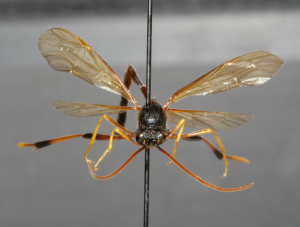


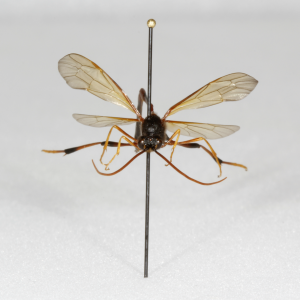
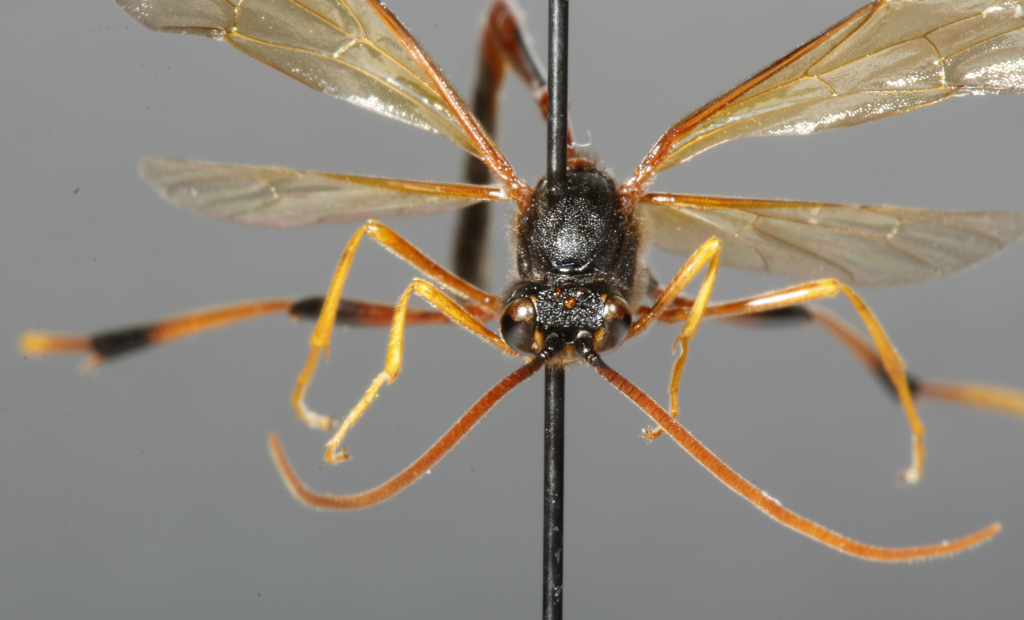
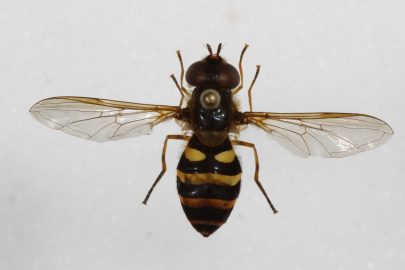


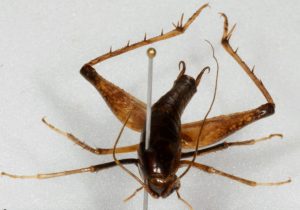
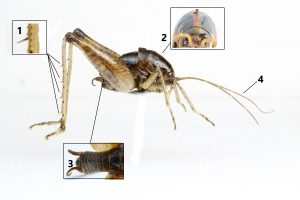
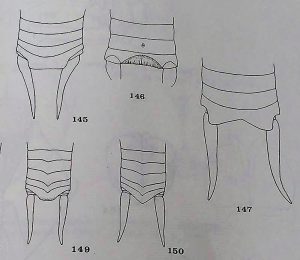
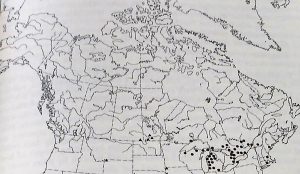

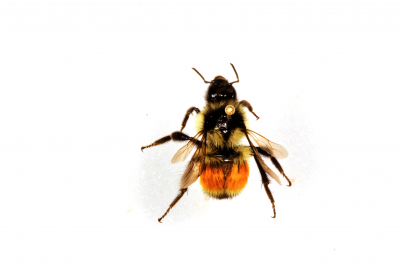


.jpg)
